Saudi Self Storage Market Growth: What It Means for You
The self storage market in Saudi Arabia and the GCC is booming. Understand the trends shaping the industry and how WheeKeep is built to serve your evolving needs.
Most people think of self storage as a passive industry, rows of metal shutters, a padlock, and a monthly direct debit. What is actually happening across Saudi Arabia and the broader Gulf Cooperation Council tells a completely different story. The self storage GCC market is in the middle of a structural transformation, driven not by incremental demand but by seismic shifts in how people live, work, consume, and relocate across the region. Understanding those forces does not just satisfy intellectual curiosity. It directly shapes the quality, price, and accessibility of the storage solution you can access today.
This article unpacks the real drivers behind market growth, what that growth means for customers in cities like Riyadh, Jeddah, and Dammam, and how to use that knowledge to make smarter decisions about your own storage needs, whether you are a family mid-renovation in Jeddah's Al-Rawdah district, an e-commerce seller needing overflow capacity in Riyadh, or a contractor working on a Vision 2030 giga-project near AlUla.
Why the Self Storage Saudi Arabia Market Is Growing Faster Than Most Realise
Self storage Saudi Arabia is not growing slowly, it is accelerating, and the reasons are structural rather than cyclical. Several converging forces have created a demand environment that no single factor could have produced alone.
Urbanisation at an Unprecedented Pace
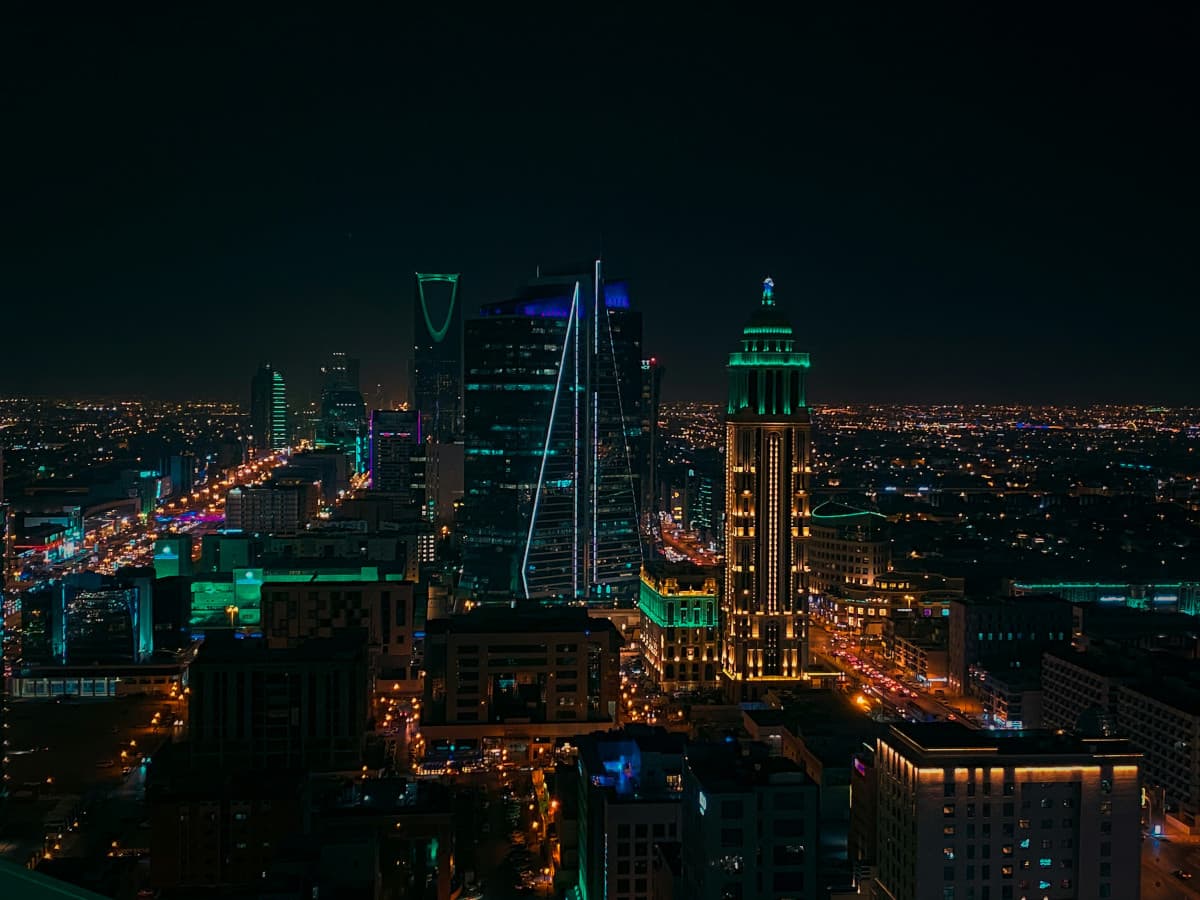
Saudi Arabia is one of the most urbanised countries in the Arab world, with the World Bank estimating that over 84% of the Kingdom's population lives in urban areas. Riyadh alone has grown from a mid-sized administrative capital into a megacity that the Royal Commission for Riyadh City (RCRC) is now planning to accommodate a population exceeding 15 million by mid-century. Jeddah is expanding along its coastal and inland corridors simultaneously. Dammam and Khobar are merging into a single Eastern Province conurbation.
When cities grow this fast, apartment sizes shrink relative to household accumulation. Families acquire more goods but live in increasingly compact spaces. The gap between what people own and what their home can store is the founding commercial premise of the entire self storage industry, and that gap is widening rapidly across Saudi cities.
The Expatriate Cycle
Saudi Arabia hosts one of the largest expatriate populations in the world, with foreign nationals representing a significant share of the workforce in sectors ranging from healthcare and construction to finance and hospitality. Expatriates arrive, settle, accumulate household goods, and eventually depart or relocate internally. Each transition, arrival, inter-city move, home country return, generates a storage need. This cycle is not occasional; it is continuous, producing a permanent base of demand that is structurally different from the more stable, owner-occupier-dominated demand seen in markets like the United Kingdom or Australia.
Vision 2030 and the Construction Surge
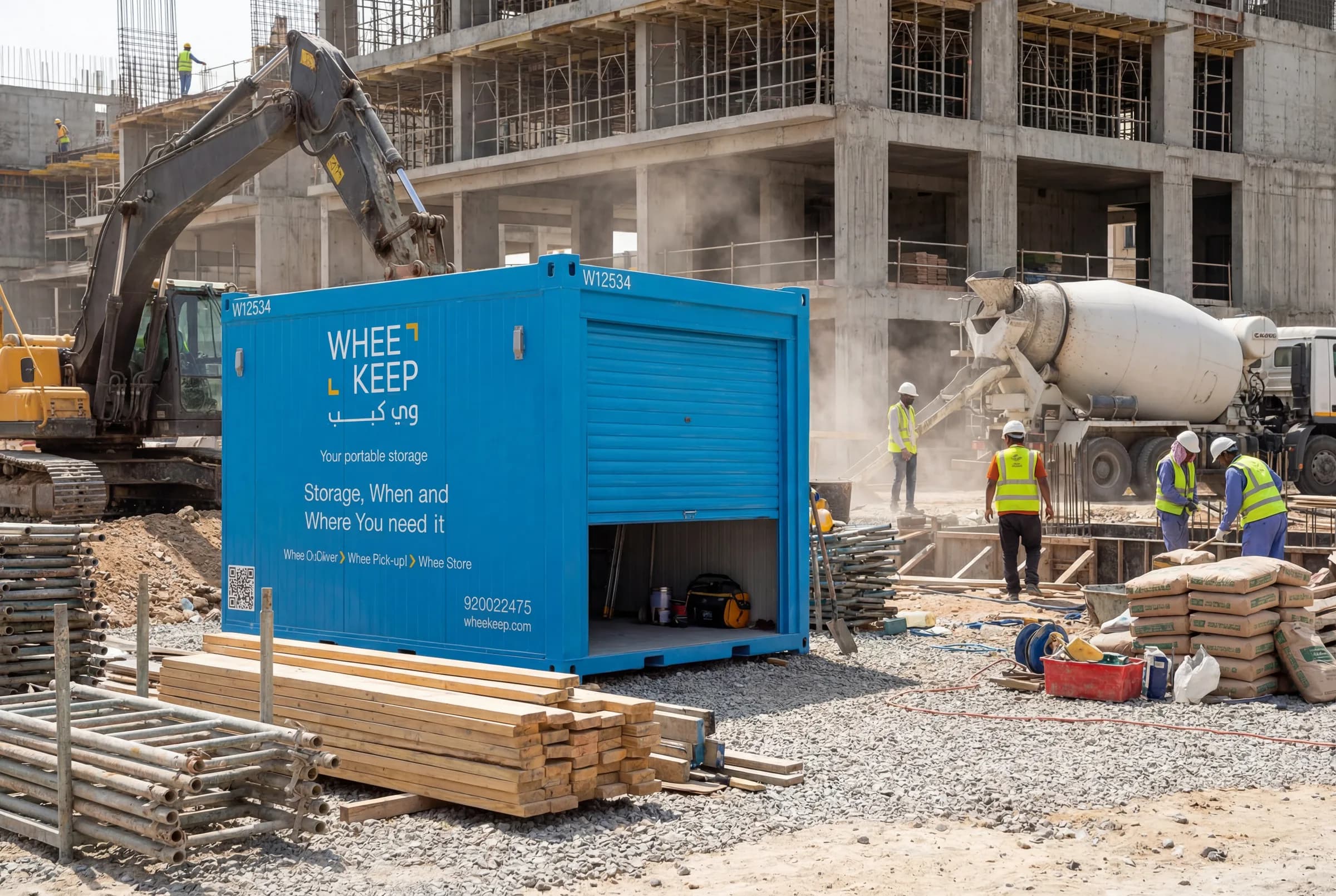
The Vision 2030 programme has unleashed a construction and infrastructure wave of historic scale. NEOM, the Red Sea Project, Qiddiya, Diriyah Gate, ROSHN residential communities, and AMAALA collectively represent hundreds of billions of riyals in active project spend. Each project displaces populations, creates temporary worker communities, and generates construction-phase storage demand for equipment, tools, documents, and personal effects. Contractors working in remote project zones like AlUla or Tabuk have very limited local warehousing options, making flexible self storage units a practical operational tool rather than a convenience.
The E-Commerce Inflection Point
Saudi Arabia's e-commerce sector has moved from early adoption to mainstream consumer behaviour. Platforms including Noon, Amazon.sa, and Jarir now serve millions of Saudi customers monthly. Behind the consumer-facing growth sits a fragmented ecosystem of small sellers, independent brands, and social-commerce entrepreneurs who need inventory space but cannot afford or justify a formal warehouse lease. Self storage units have become the de facto micro-fulfilment solution for this segment, affordable, flexible, and accessible without the commitment of a commercial property contract.
The practical implication for you as a customer is that the market's growth has attracted serious operators who invest in quality, security, and technology. A growing market rewards operators who build real infrastructure. That is why you are seeing purpose-built facilities with climate consideration, CCTV monitoring, and digital booking systems rather than the informal garage-conversion model that characterised earlier storage in the region.
The GCC Dimension: How Regional Trends Shape What You Get in Saudi Arabia
The self storage GCC market does not operate in national silos. What happens in Dubai, Abu Dhabi, Bahrain, and Kuwait directly influences the Saudi market through capital flows, operator expansion, and customer expectations.
The UAE as a Benchmark Market
The UAE, particularly Dubai, is the most mature self storage market in the GCC. Operators in Dubai have been refining the customer experience for well over a decade, developing digital booking platforms, transparent pricing models, flexible cancellation terms, and professional facility standards. That maturity sets expectations. Saudi customers who have lived in or visited the UAE arrive with a frame of reference: they know what good storage looks like. This cross-pollination of consumer expectations raises the floor for every operator in the Kingdom.
For you as a customer, this means the best storage companies in Saudi Arabia are now competing on service quality benchmarks that were established in a more mature adjacent market. That competition benefits you directly through better facilities, more transparent pricing, and more flexible contract terms.
GCC Capital and Investment Flows
Regional investment capital is flowing into the Saudi storage sector as part of broader commercial real estate diversification. Saudi Arabia's relatively under-penetrated storage market (measured by storage space per capita relative to the UAE or Western markets) represents an attractive growth runway for investors. The practical consequence is that new purpose-built facilities are opening, existing operators are expanding their unit inventories, and pricing pressure is gradually emerging in major cities.
Cross-Border Demand from Pilgrims and Hajj Seasons
Makkah and Madina present a storage demand profile that has no equivalent anywhere else in the GCC or the world. Millions of pilgrims arrive for Hajj (typically in the 12th month of the Hijri calendar, Dhul Hijjah) and Umrah throughout the year. Many arrive from GCC countries and need short-term storage for luggage, personal goods, and business merchandise during their stay. The seasonal concentration of demand creates specific requirements for operators serving these cities, high turnover, short-term flexibility, and proximity to accommodation clusters.
This is not a peripheral market consideration. It represents a structurally unique demand driver that distinguishes the Saudi storage market from every other GCC country and creates service requirements that only operators with genuine local presence can meet.
What Market Growth Actually Means for Storage Prices and Unit Availability
Market growth is not uniformly good news for customers. Understanding its nuanced effects on pricing and availability helps you make smarter timing and location decisions.
The Pricing Paradox of a Growing Market
In most industries, market growth attracts competition, which drives prices down. Self storage has a complicating factor: supply takes time to build. A new storage facility requires site acquisition, construction, fit-out, and regulatory approval. That process typically spans 18 to 36 months from decision to opening. In a fast-growing market, demand can outpace new supply for extended periods, creating pockets of genuine scarcity, particularly for smaller units in dense city-centre locations.
In Riyadh's central districts and Jeddah's northern corridors, demand for small and medium units regularly runs ahead of available inventory. This supply-demand imbalance means that waiting for prices to fall before booking is often a losing strategy. The unit you need today may not be available at any price in six weeks if you delay.
Unit Size Economics in the Saudi Context
Saudi household goods tend to be larger and more numerous than European equivalents, reflecting both higher average household incomes and a cultural preference for well-furnished, generously appointed living spaces. Sofas, dining sets, and ornate bedroom furniture that are common in Saudi homes require significantly more cubic metres of storage than the IKEA-scale furnishings typical in Northern European apartments.
This has a direct implication for unit sizing: a "medium" unit that would comfortably store a European family's belongings may be undersized for a Saudi household. When estimating your requirements, err towards the larger unit, the marginal cost difference is modest relative to the frustration of realising mid-move that your unit cannot hold everything.
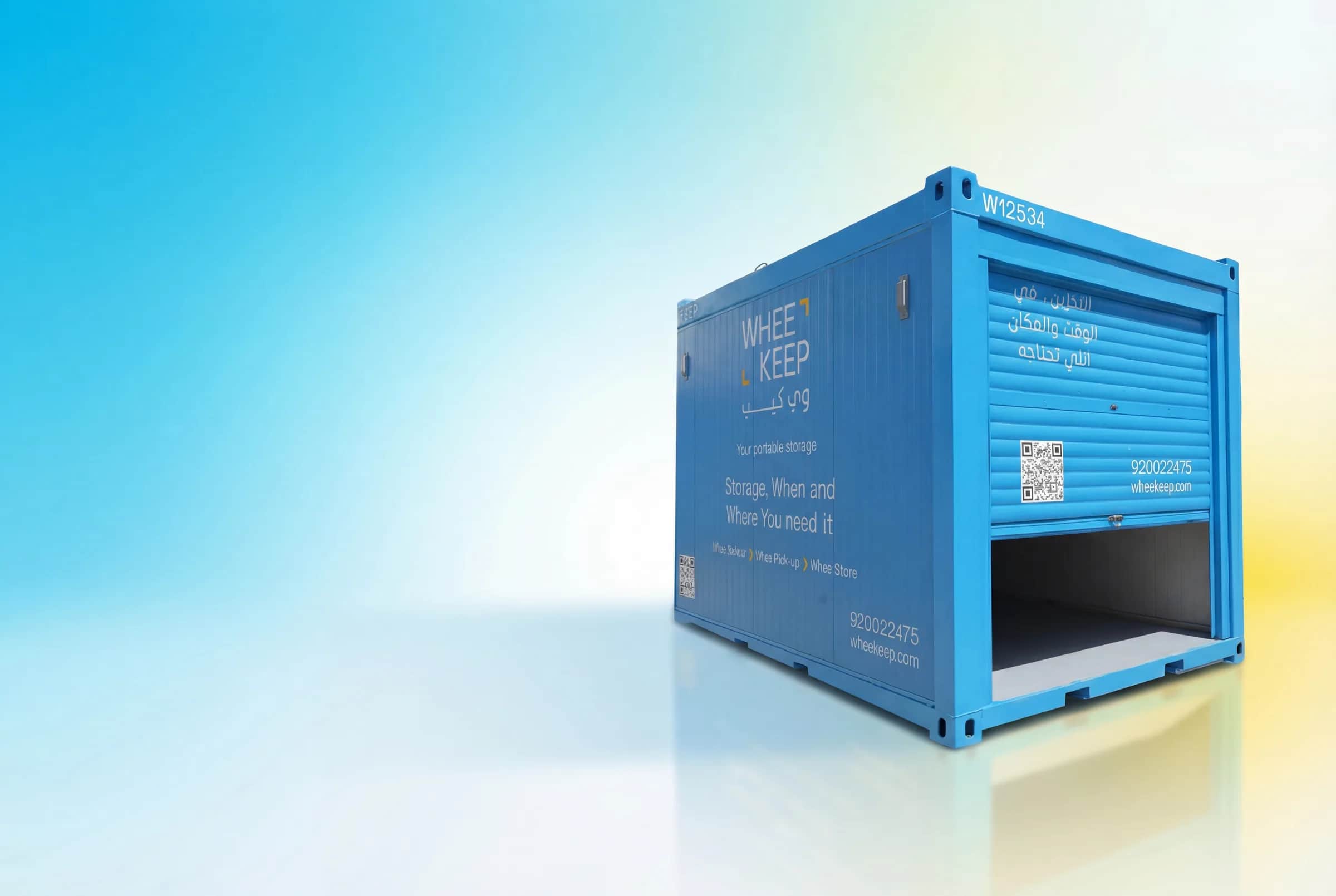
At WheeKeep, pricing is straightforward and transparent with no long-term contract required. A small unit (2.4 × 1.5 × 2.35 m) starts at 599 SAR per month, the medium unit (3.6 × 1.5 × 2.35 m) is 899 SAR per month, and the large unit (3.6 × 2.4 × 2.5 m) is 1,289 SAR per month. Every unit includes a padlock, CCTV monitoring, and on-demand return access. Cancel anytime.
Storage Companies in Saudi Arabia: How to Read the Market and Choose Wisely
The growth of storage companies in Saudi Arabia has created a more competitive but also more varied landscape. Not every operator serves every customer equally well. Understanding the different operator profiles helps you identify which one genuinely fits your situation.
The Three Operator Tiers
Tier 1: Purpose-built modern facilities. These are operators who have invested in designed-for-purpose storage infrastructure, purpose-built or purpose-converted facilities with consistent unit sizing, proper security systems (CCTV, individual access control), clean environments, and digital booking capabilities. They offer transparent pricing and flexible terms. WheeKeep operates in this tier, with a facility in Jeddah and one in Riyadh.
Tier 2: Warehouse-adapted operators. These are logistics or warehousing businesses that have partitioned existing commercial space into storage units as a secondary revenue stream. The economics can be attractive, but the customer experience is typically secondary to the core logistics operation. Access hours may be restricted, security standards may be uneven, and the customer-facing processes (booking, billing, access) are often manual.
Tier 3: Informal arrangements. Spare commercial premises, informal sub-lets, and unregistered operators still exist in Saudi Arabia's secondary cities and peripheral urban areas. These arrangements carry real risk, no contractual protection, uncertain security, and no recourse if goods are damaged or access is denied. Avoid them regardless of apparent cost savings.
The Framework for Evaluating Any Storage Company in Saudi Arabia
Use this six-point evaluation framework when comparing storage units KSA operators:
- Location accessibility. Is the facility genuinely accessible from where you live or work? A cheaper unit 30 km from your home may cost more in aggregate once you factor in petrol, time, and the Saudi summer heat at 42°C when you need to access your unit at 14:00 in July.
- Contract flexibility. Does the operator offer month-to-month terms with no penalty for early cancellation? In a market where your situation may change rapidly (relocation, project completion, lease change), lock-in contracts are a significant risk.
- Security infrastructure. CCTV coverage, individual unit padlocks, and controlled site access are non-negotiable minimum standards. Ask specifically whether cameras cover individual unit corridors, not just entry gates.
- Access hours. Does the facility's operating schedule match your lifestyle? If you run a business and need early morning or evening access, confirm hours explicitly. WheeKeep's customer service is open 8 AM to 10 PM Sunday to Thursday and 9 AM to 10 PM on Saturday, and visits to your unit are by appointment.
- Pricing transparency. Are all charges disclosed upfront? Watch for administrative fees, insurance mandates, and deposit requirements that inflate the effective monthly cost above the advertised rate.
- On-demand return capability. Can the operator retrieve specific items and deliver them to you without requiring you to visit the facility in person? This feature is transformative for business customers managing inventory and for busy households.
The Rise of Storage Units KSA: What Specific Customer Segments Are Experiencing
Market growth data is abstract until you map it to the specific situations of real customers. The following profiles reflect the actual demand patterns emerging across Saudi Arabia's evolving storage landscape.
The Relocating Family in Jeddah or Riyadh
Saudi Arabia's internal migration is significant. Families relocate between cities for employment, children's education, and the pull of new residential developments like ROSHN communities. A move from a large family villa in Jeddah's Al-Andalus district to a new apartment in Riyadh's northern suburbs almost always creates a storage gap, the new home is available before the old one is vacated, or the family is downsizing and needs time to decide what to keep, sell, or donate.
A medium WheeKeep unit at 899 SAR per month covers the contents of a standard Saudi family's living room and two bedrooms comfortably. The month-to-month flexibility means you are not locked in for six months if the move resolves faster than expected.
The E-Commerce Seller and Social Commerce Entrepreneur
Saudi Arabia's social commerce scene is vibrant, with Instagram and Snapchat storefronts operated by thousands of individual sellers moving fashion, home goods, food products, and beauty items. As order volumes grow, the seller's home garage or spare bedroom stops working as a fulfilment hub. A dedicated storage unit provides the separation of inventory from personal space, the organisation needed for accurate order picking, and the professional context that supports business growth.
A small unit at 599 SAR per month is sufficient for most early-stage e-commerce operations, roughly equivalent to a small van load of boxed inventory. As the business scales, upgrading to a medium or large unit requires no new contract, just a unit change.
The Contractor and Project Team on Vision 2030 Sites
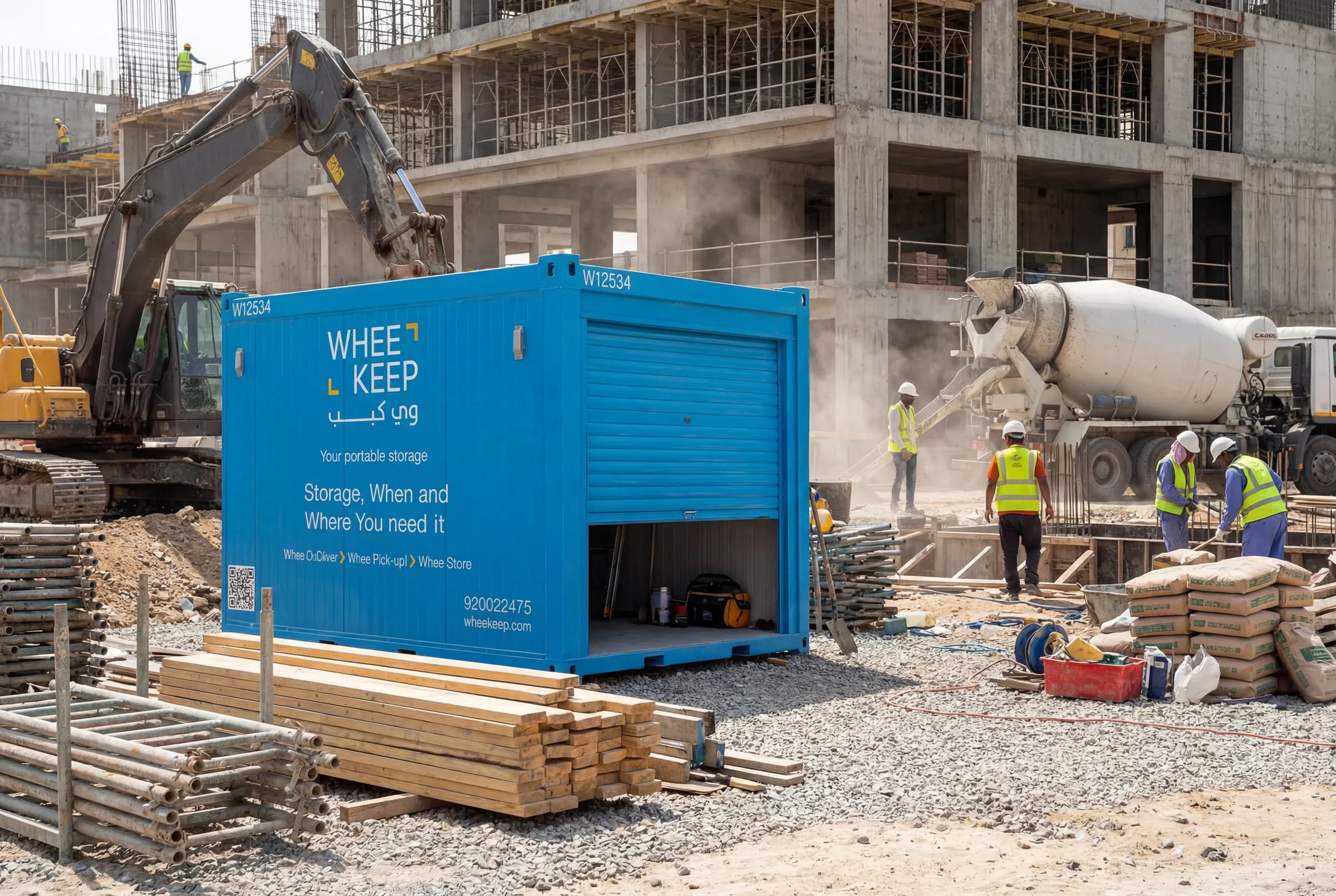
Construction and infrastructure teams working on projects in AlUla, Tabuk, or NEOM face a specific storage challenge: project sites are often in areas with no established commercial infrastructure. Tools, safety equipment, specialist instruments, and personal effects for site-based workers all require secure storage that does not depend on the construction site's own (often inadequate) facilities.
For project managers, a large WheeKeep unit at 1,289 SAR per month provides the equivalent of a small secure equipment store accessible on the team's schedule, with the flexibility to close out when the project phase ends without residual lease obligations.
The Expatriate in Transition
Expatriates leaving Saudi Arabia at the end of a contract face a logistical puzzle: shipping a full household internationally is expensive and slow, but abandoning accumulated goods is wasteful. Storage bridges the gap, belongings can be held securely while the expatriate settles into the next location, ships a smaller consolidated consignment, or returns for a second contract.
For expatriates arriving in Saudi Arabia, storage is equally useful during the initial settling-in period when permanent accommodation is not yet secured. Month-to-month flexibility is the critical feature here, the expatriate does not know how long the bridge period will last.
If you recognise your situation in any of these profiles, there is no reason to wait. Explore WheeKeep's available units and book online, the process takes minutes and your unit is ready when you are.
The Best Self Storage Company in Saudi Arabia: What "Best" Actually Means
The phrase "best self storage company in Saudi Arabia" appears in countless searches, but it conflates very different customer priorities. There is no single best operator for every customer, the best option is the one that best matches your specific combination of location, unit size need, access frequency, duration, and budget.
Reframing "Best" as "Best Fit"
Use this decision matrix to identify your optimal match rather than chasing a generic "best" label:
| Your Priority | What to Look For | WheeKeep's Position |
|---|---|---|
| Location proximity to home | A facility in your city, or delivery to your door | ✅ One facility in Jeddah and one in Riyadh; the unit comes to you |
| Flexible contract (no lock-in) | Month-to-month, cancel anytime | ✅ No long-term contract required |
| Security and peace of mind | CCTV, individual padlock, controlled access | ✅ CCTV + padlock included in every unit |
| Transparent pricing | All-in monthly rate, no hidden fees | ✅ 599 / 899 / 1,289 SAR/mo published openly |
| On-demand item retrieval | Operator can retrieve and deliver specific items | ✅ On-demand return, 99 SAR before VAT, the round trip |
| Business-grade unit sizing | Large units for equipment, inventory, documents | ✅ Large unit 3.6 × 2.4 × 2.5 m available |
The "When and Where You Need It" Principle
WheeKeep's operating tagline, "When and Where You Need It," is not marketing language. It describes a structural commitment to geographic coverage and operational flexibility that distinguishes the company from operators who treat Saudi Arabia as a single market centred on one city.
That continuity of service across a relocation event is something most customers undervalue until they experience the alternative: building a new relationship with a new operator in each city, with different contracts, different access systems, and different billing cycles.
How Vision 2030 is Reshaping Storage Demand for the Next Decade
Vision 2030's impact on the storage market extends well beyond the construction phase of giga-projects. The programme is fundamentally restructuring where Saudis live, how businesses operate, and what the country's economic profile looks like, all of which have long-term demand implications for the storage sector.
Tourism Infrastructure and the Seasonal Storage Opportunity
Saudi Arabia is pursuing an ambitious tourism agenda, targeting tens of millions of international visitors annually through projects like AlUla (managed by the Royal Commission for AlUla), AMAALA, and the Red Sea Project. Tourism infrastructure creates several layers of storage demand: hospitality businesses managing seasonal equipment and seasonal linen inventories; tour operators storing adventure sports equipment; and individual tourism entrepreneurs (guides, photographers, event organisers) needing secure equipment storage between assignments.
This is a genuinely new demand category for the Saudi storage market. It did not exist at meaningful scale five years ago. As tourism infrastructure matures and visitor numbers grow, the storage needs of tourism-adjacent businesses will become a significant market segment, and operators who are already present in locations like AlUla and the Red Sea coast will have a structural advantage.
New Residential Communities and the Move-In Surge
ROSHN, the Public Investment Fund's residential development arm, is building new communities across multiple Saudi cities. New residential development at scale means a sustained wave of household moves, families transitioning from older accommodation into new ROSHN homes, generating the classic "move-in gap" storage need. This is predictable, recurring demand that will persist for as long as the development pipeline is active.
For the individual customer, the implication is practical: if you are moving into a new ROSHN community or any new development area, plan your storage booking well in advance. The move-in surge around major handover dates concentrates demand and reduces unit availability.
The Knowledge Economy and Office Decentralisation
Vision 2030's economic diversification agenda is building a knowledge economy in Saudi Arabia, technology, finance, healthcare, entertainment, and professional services are all growing sectors. This shift is associated with more flexible working arrangements, the growth of co-working spaces, and the decentralisation of office functions. Businesses that previously maintained large, document-heavy offices are moving to lighter, more agile workplaces, but the documents, equipment, and legacy inventory from those offices need to go somewhere.
Commercial storage demand driven by office rationalisation is one of the fastest-growing segments in mature storage markets globally, and Saudi Arabia is now entering that same dynamic as its corporate sector modernises.
Practical Guidance: Getting Maximum Value from Your Storage Unit in the Current Market
Understanding market growth is useful context, but the most valuable information is what you can do with that context to optimise your own storage experience. The following guidance is derived from the patterns observed across WheeKeep's customer base in Jeddah and Riyadh.
Right-Sizing Your Unit: The Common Mistake
The most common customer mistake is under-sizing. Customers estimate based on the volume of items they can visualise, forgetting irregular-shaped items (bicycles, pushchairs, sports equipment), items currently in use that will be stored later, and the practical reality that boxes stacked floor-to-ceiling are difficult to access and organise.
A useful rule of thumb for Saudi households: a standard family apartment's contents (excluding kitchen appliances and fitted furniture) typically require a medium unit. A villa's contents usually need two Large units, or a Large and a Medium for a smaller villa. If you are storing business inventory alongside personal goods, always use separate units to maintain organisation and access efficiency.
Organising for Access, Not Just for Volume
Saudi summer temperatures make extended visits to storage facilities uncomfortable. Optimising your unit for fast, targeted access, rather than maximum volume density, reduces the time you need to spend on-site. Practical principles:
- Place frequently accessed items at the front of the unit, near the door.
- Label every box on three sides (front, top, and one end) so you can read the label without moving the box.
- Keep an inventory list (a simple spreadsheet or notes app) of what is in each box, cross-referenced by box number.
- Disassemble furniture where possible to create floor space and reduce the risk of items being inaccessible behind large pieces.
- Use WheeKeep's on-demand return service for specific items you need retrieved, it eliminates the need for a full site visit for a single item.
Timing Your Storage Booking Around Saudi Seasonal Patterns
Ramadan significantly affects business operations across Saudi Arabia, including storage facilities. Access during late evening hours (after Iftar, between 21:00 and 23:00) tends to spike as customers use the cooler night temperatures and post-Iftar energy to organise and access their units. If you need to move items in or out of storage during Ramadan, plan for this pattern and book your access slot (or your moving assistance) with more lead time than usual.
Hajj season (Dhul Hijjah) affects logistics networks across western Saudi Arabia, including Jeddah. Road congestion, moving vehicle availability, and porter capacity all become constrained. If your storage need coincides with Hajj season, either complete your move before the peak Hajj travel period begins or plan for a two-to-three day buffer on any logistics coordination.
Using Storage as a Business Tool, Not Just a Holding Space
The most sophisticated business users of self storage in Saudi Arabia treat their unit as an operational asset rather than a passive holding space. Specific tactics that deliver measurable business value:
- Rotating inventory: Keep slow-moving stock in storage and fast-moving stock at home or in the office. Restock from storage on a scheduled cycle rather than ad hoc, reducing the number of access visits.
- Document archiving: Saudi businesses are required to retain certain documents under ZATCA (Zakat, Tax and Customs Authority) regulations. A dedicated storage unit for archived documents keeps the primary workspace clear while maintaining accessibility for audit purposes.
- Equipment staging: For contractors and project teams, use a storage unit as a staging area, pre-positioning equipment for the next project phase so it is available immediately when needed rather than waiting on delivery.
- Sample and display management: For businesses in retail, fashion, or interior design, storage units serve as sample libraries, holding catalogues, fabric samples, display materials, and seasonal collections between deployments.
Ready to put a unit to work for your household or business? Book your WheeKeep storage unit today, units in Jeddah and Riyadh are available now, with flexible month-to-month terms and no long-term commitment required.
The Self Storage GCC Competitive Landscape: What Saudi Customers Should Know
The self storage GCC market is consolidating. Regional operators are expanding from their home markets into Saudi Arabia, and Saudi operators are strengthening their multi-city presence. This consolidation has two important implications for customers.
Consolidation Raises Standards but Reduces Variety
As the market consolidates around a smaller number of well-capitalised operators, facility standards improve, newer facilities, better technology, more consistent service. The downside is that the informal, low-cost options that some customers relied on gradually disappear. The effective floor price for a legitimate, secure self storage unit in a major Saudi city is rising as the market professionalises.
This is not a reason to panic about cost. It is a reason to evaluate the genuine total cost of informal arrangements, including the risk premium of using an unregistered facility with no contractual protection for your goods. A purpose-built facility at 599 SAR per month provides security, accessibility, and contractual certainty that an informal arrangement at half the price cannot match.
Digital Booking and Transparency as a Differentiator
In mature storage markets like the USA, UK, and Australia, digital booking has become the default, customers research, compare, and book entirely online without ever speaking to a salesperson. The Saudi and GCC markets are moving rapidly in the same direction, driven by high smartphone penetration and a customer base that is comfortable with digital commerce through platforms like Noon and Amazon.sa.
Operators who have invested in digital booking infrastructure provide a qualitatively better customer experience: you can see available units, compare sizes and prices, and confirm your booking at any time of day, without waiting for office hours. This is particularly valuable for expatriates and business customers who may be coordinating storage arrangements remotely while still in transit.
Frequently Asked Questions
How much does a self storage unit cost in Saudi Arabia?
At WheeKeep, storage units start at 599 SAR per month for a small unit (2.4 × 1.5 × 2.35 m), 899 SAR per month for the medium unit (3.6 × 1.5 × 2.35 m), and 1,289 SAR per month for the large unit (3.6 × 2.4 × 2.5 m). All prices include a padlock, CCTV security, and on-demand return service. There is no long-term contract, cancel anytime.
What is driving the growth of self storage in Saudi Arabia?
The primary drivers include rapid urbanisation, a large and mobile expatriate population, the construction boom driven by Vision 2030 giga-projects (NEOM, Red Sea Project, Qiddiya, Diriyah Gate), the growth of e-commerce and social commerce, and the unique seasonal demand created by Hajj and Umrah pilgrimages.
Is self storage in Saudi Arabia secure?
At purpose-built facilities like WheeKeep, security is a core feature rather than an add-on. Every unit includes an individual padlock and CCTV monitoring. Site access is controlled. When evaluating any storage provider, confirm specifically that CCTV covers individual unit corridors, not just entry gates, and that you control your own unit padlock.
Can I access my storage unit during Ramadan?
Yes. WheeKeep's customer service is open 8 AM to 10 PM Sunday to Thursday and 9 AM to 10 PM on Saturday, and visits to your unit are by appointment. Plan your access timing accordingly and allow extra lead time for any moving or logistics coordination during this period.
How do I choose between a small, medium, and large storage unit?
As a practical guide: a Small unit suits a studio apartment's contents or a small business inventory; a Medium covers a one or two-bedroom apartment; a Large suits a three-bedroom home or commercial equipment, and a villa usually needs two Large units. Saudi household goods tend to be larger and more numerous than Western European equivalents, so if you are uncertain between sizes, choose the larger option.
Which cities does WheeKeep serve?
Jeddah and Riyadh, with one facility in each city. The unit is delivered to your door anywhere in either city.
Can businesses use self storage units in Saudi Arabia?
Absolutely. Business customers represent a significant and growing share of demand for storage units in KSA. Common use cases include e-commerce inventory, document archiving for ZATCA compliance, contractor equipment staging, retail overflow, sample and display management, and seasonal goods storage. WheeKeep's large unit (3.6 × 2.4 × 2.5 m at 1,289 SAR/month) is particularly suited to business customers with equipment or inventory.
What is the difference between self storage and a traditional warehouse in Saudi Arabia?
A traditional warehouse requires a commercial lease (typically 12 months or longer), large minimum space commitments, and coordination with a third-party logistics operator. Self storage at WheeKeep is month-to-month, available in sizes from small unit to large unit, accessible directly by the customer, and requires no commercial tenancy agreement. For most individuals and SMEs, self storage is significantly more flexible and cost-effective than a warehouse for volumes under approximately 50 cubic metres.
Is there a minimum storage period at WheeKeep?
WheeKeep offers flexible, month-to-month storage with no long-term contract requirement and the ability to cancel anytime. This makes it suitable for short-term needs (a single month during a move or renovation) as well as long-term storage (ongoing business inventory or extended expatriate transitions).
How does self storage in Saudi Arabia compare to storage options in the UAE?
The UAE, particularly Dubai, has a more mature self storage market with a longer track record of purpose-built facilities. Saudi Arabia's market is growing rapidly and modern operators like WheeKeep now match UAE-standard facilities in terms of security, unit quality, and digital booking capability. Pricing in Saudi Arabia is generally comparable to the UAE per square metre, and WheeKeep charges the same prices in Jeddah and Riyadh.
What should I do if I need to retrieve a specific item from my storage unit without visiting in person?
WheeKeep offers on-demand return with every unit, at 99 SAR before VAT, the round trip. This service allows you to request retrieval and delivery of specific items from your unit without needing to visit the facility yourself. It is particularly valuable for business customers managing inventory and for households who have stored items during a long-distance relocation.
Key Takeaways for Anyone Evaluating Self Storage in Saudi Arabia or the GCC
- The market is growing for structural reasons, not cyclical ones. Urbanisation, Vision 2030, e-commerce growth, and the expatriate cycle are permanent demand drivers, not temporary spikes. The quality and accessibility of storage options will continue to improve as the market matures.
- Timing matters. Seasonal demand peaks around Ramadan, Hajj season, and the post-summer return in September-October create genuine unit scarcity in high-demand locations. Booking two to four weeks ahead is standard practice in peak periods.
- Under-sizing is the most common customer mistake. Saudi household goods are larger than the European or American equivalents that most unit size guides are calibrated against. When in doubt, choose the next size up.
- Contract flexibility is non-negotiable in a dynamic market. Month-to-month terms with no penalty for early cancellation protect you against the unexpected, a faster-than-expected move, a project that ends early, or a business that scales up and needs a different solution.
- The best self storage company in Saudi Arabia is the one that best fits your specific situation. Location, unit size, access hours, digital booking capability, on-demand retrieval, and transparent pricing collectively define the right fit, not a generic "best" ranking.
- WheeKeep serves Jeddah and Riyadh with month-to-month pricing from 599 SAR a month, CCTV security, a free padlock (or your own) and on-demand return (99 SAR before VAT, the round trip).
The Saudi and GCC storage markets are in a period of genuine structural growth. For customers, that growth translates into better facilities, more competition on service quality, and more options than ever before. The practical step is simple: identify the unit size you need, confirm the location that works for you, and book on flexible terms that preserve your options. WheeKeep's booking process takes minutes, start when and where you need it.