8 Security Features to Check in a Saudi Storage Facility
Before renting a storage unit in Saudi Arabia, check these 8 security features. WheeKeep sets the standard for safe, reliable, and accessible self storage in the Kingdom.
Most people renting a storage unit for the first time ask the wrong question. They ask: "How much does it cost?" The better question is: "How safe is my property once I hand over the keys?" In Saudi Arabia's rapidly expanding self-storage market, the gap between a facility that looks professional and one that genuinely protects your belongings can be enormous. A padlock on the door and a security guard at the gate are no longer enough. Modern secure storage in Saudi Arabia demands layered protection, climate control, and verified access management, especially given the extreme heat, the pace of urban development, and the sheer diversity of items being stored across Riyadh, Jeddah, Dammam, and beyond.
This guide breaks down the eight security features that separate a reliable storage facility from one that could leave your valuables, business inventory, or household items vulnerable. Whether you are a family relocating between districts in Riyadh, an expatriate between assignments, a small business owner storing commercial goods, or a contractor working on one of the Kingdom's giga-projects, understanding what to look for before you sign a rental agreement could save you significant financial loss and stress. Read each section carefully, some of the most important protections are the ones most facilities never mention in their sales pitch.
Why Security Standards for Self Storage in Saudi Arabia Are Higher Than You Think
Saudi Arabia's environment creates storage challenges that simply do not exist in most other markets. Summer temperatures in Riyadh and the Eastern Province regularly reach 45–50°C, with humidity along the Jeddah and Dammam coastlines compounding the damage potential. Temperature and humidity records for Saudi cities are published by the National Center for Meteorology. Electronics, wooden furniture, documents, leather goods, and pharmaceutical products can be destroyed within weeks if stored without proper environmental control. Security is not just about preventing theft; it is about protecting property from environmental and structural threats that are specific to the Gulf climate.
At the same time, the Kingdom's rapid urban growth, driven by Vision 2030 developments including NEOM, Qiddiya, Diriyah Gate, the Red Sea Project, and ROSHN residential communities, is generating an unprecedented volume of relocations, renovations, and business transitions. Millions of people are moving, upgrading, or temporarily displacing their possessions. The demand for secure storage units in Saudi Arabia has grown accordingly, and not every facility that opened to meet that demand was built to the same standard.
Understanding what genuine security looks like at a storage facility is the first step toward making a decision you will not regret.
Feature 1: Multi-Layer CCTV Coverage with No Blind Spots
Closed-circuit television is the baseline expectation at any credible storage facility, but the quality and coverage of a CCTV system varies enormously. A single camera at the main entrance provides almost no meaningful deterrent or evidentiary value. What you need is multi-layer coverage that records every corridor, every unit-access point, the loading bay, the car park, and all perimeter approaches, continuously, with no gaps.
What to Ask a Facility About Their CCTV System
Before signing a contract, ask the following questions directly: How many cameras are installed? Are they monitored in real time or recorded only? What is the footage retention period? Are cameras active 24 hours a day, seven days a week, including during Ramadan and public holidays? Does the facility use high-definition cameras capable of capturing number plates and facial detail, or older analogue systems with low resolution?
A well-run facility should be able to answer these questions without hesitation. Vague answers, "we have cameras everywhere", are a red flag. The standard you should expect is full HD cameras at every unit-row intersection, at each entry and exit point, in the lift lobbies, and covering the exterior perimeter. Footage should be retained for a minimum of 30 days, giving you a meaningful window to identify any incident after the fact.
How WheeKeep Approaches CCTV
WheeKeep includes CCTV monitoring as a standard feature at its facilities in Jeddah and Riyadh. Customers storing with WheeKeep benefit from continuous surveillance coverage, which is included in the unit price rather than offered as an optional upgrade. This is a meaningful distinction: at some budget facilities, enhanced security monitoring carries an additional monthly charge.
Feature 2: Individual Unit Padlock Security
The security of the facility perimeter means nothing if the individual unit itself can be opened with a low-quality lock. Many storage facilities provide shared access corridors where multiple customers' units are accessible once a person has entered the building. In this model, the unit lock is your last line of defence. A cheap padlock with a thin shackle can be cut with bolt cutters in under ten seconds.
The Padlock Standard That Actually Protects You
The padlocks used on individual units should meet a recognised standard for resistance to cutting, picking, and drilling. Look for locks with hardened steel shackles, anti-pick pin configurations, and a shrouded design that limits the angle available for bolt cutters. Some high-end facilities use disc locks, which offer superior resistance to all common forms of forced entry.
Beyond the physical quality of the lock, consider who controls the key. In a properly run facility, only the renter should hold the key to their unit. Staff should not be able to access a renter's unit without providing advance notice and obtaining documented authorisation. This policy protects renters from both external theft and internal access risks.
WheeKeep includes a padlock as standard with every unit rental, eliminating the common frustration of arriving with a new rental and discovering you need to purchase your own lock from a hardware store. This is a small operational detail that reveals a lot about how a facility thinks about the customer experience.
Feature 3: Controlled Access with Personal PIN or Digital Entry
The weakest point in most storage facilities is the access control system. A manned gate that relies on a security guard recognising faces or checking a printed list is not access control, it is theatre. Genuine access control means that entry to the facility and to individual corridors is governed by a verified, auditable system tied to a specific renter's identity.
PIN Codes, Key Cards, and Digital Access
Modern storage facilities use electronic access systems that issue each renter a unique PIN code or digital key card. Entry is logged automatically, creating a time-stamped record of every access event. If an incident occurs, the facility management can review exactly who accessed which areas and at what time. This is both a deterrent (because people know their movements are recorded) and an investigative tool.
PIN-based systems are particularly practical in the Saudi context, where many renters prefer not to carry additional physical cards and appreciate being able to share access with a trusted family member or employee without handing over a physical key. Some newer facilities are moving toward smartphone-based access, where the renter's mobile device acts as the credential, adding a further layer of identity verification.
Visitor and Contractor Access Protocols
Ask any potential facility how they handle access for non-renters: delivery drivers, contractors, or moving company staff. A serious facility will have a formal visitor management process, including identification checks and time-limited access permissions. Facilities that allow anyone to walk in alongside a renter without any verification process represent a meaningful security gap, particularly for business customers storing high-value inventory.
Feature 4: Storage Units with 24-Hour Access in Saudi Arabia
Storage units with 24-hour access in Saudi Arabia are not universally available, and the distinction matters more here than in many other countries. Business owners managing inventory for e-commerce operations may need to retrieve or deposit stock at 23:00. Families in the middle of a relocation may need access at unusual hours. Contractors working on projects in Riyadh or Jeddah often operate on schedules that do not align with standard business hours.
Why Around-the-Clock Access Is a Security Feature, Not Just a Convenience
At first glance, 24-hour access seems like a convenience feature. In practice, it is also a security indicator. Facilities that offer genuine 24-hour access have invested in automated entry systems, adequate lighting throughout all areas at all hours, and remote monitoring infrastructure. Facilities that restrict access to business hours are often doing so because their security infrastructure only functions reliably when staff are present.
A facility that is genuinely secure at 02:00 on a Thursday morning is one that has built its security architecture to function without human supervision. That architecture, cameras, electronic locks, motion-activated lighting, remote monitoring, is what you are actually paying for when you choose a premium storage provider.
Access Hours at WheeKeep
WheeKeep's customer service is open 8 AM to 10 PM Sunday to Thursday and 9 AM to 10 PM on Saturday, and visits to your unit are by appointment. These hours accommodate the broad majority of storage access needs across the Saudi working week. Renters who require access outside these hours should confirm the available window directly with WheeKeep's team, as operational hours can be reviewed for specific commercial arrangements.
If your use case genuinely requires around-the-clock access, for example, managing a cold-chain logistics operation or running an e-commerce fulfilment process from a storage unit, it is worth raising this explicitly during the enquiry stage to ensure the facility's access model fits your operational pattern.
Feature 5: Climate-Controlled Storage in Saudi Arabia
Climate-controlled storage in Saudi Arabia is not a luxury feature for people storing expensive antiques. It is a basic requirement for protecting almost any item from the Kingdom's extreme summer conditions. The ambient temperature inside a non-climate-controlled metal container or uninsulated storage room in Riyadh during July can exceed 60°C, well above the threshold that destroys electronics, causes adhesives to fail, warps timber, degrades fabrics, and accelerates corrosion on metal items.
What Climate Control Actually Means
True climate control means the storage unit maintains a stable temperature and humidity level regardless of external conditions. For most stored goods, a target range of 18–24°C with relative humidity controlled below 60% provides adequate protection. Some specialist facilities offer tighter control for items like wine, pharmaceuticals, or archival documents, but the standard commercial range is appropriate for furniture, electronics, business inventory, clothing, and household goods.
Humidity control is particularly critical for coastal locations like Jeddah and Dammam, where salt-laden air and high ambient moisture levels accelerate rust, mould growth, and fabric degradation. A facility that only controls temperature without addressing humidity is providing incomplete protection in these environments.
Questions to Ask About Climate Control
When evaluating a facility's climate control claims, ask: Is the entire unit temperature-controlled, or only the corridor? What happens to the climate control system during a power outage, is there a backup generator? What are the target temperature and humidity set points? Is the system monitored for faults, and how quickly are maintenance issues resolved?
A facility that cannot answer these questions with specificity is likely using climate control as a marketing term rather than a genuine operational standard. The difference between a unit that says "air-conditioned" and one with verified, maintained climate management can be the difference between your electronics surviving storage intact and arriving at your new home with failed capacitors and corroded contacts.
The WheeKeep Climate Control Standard
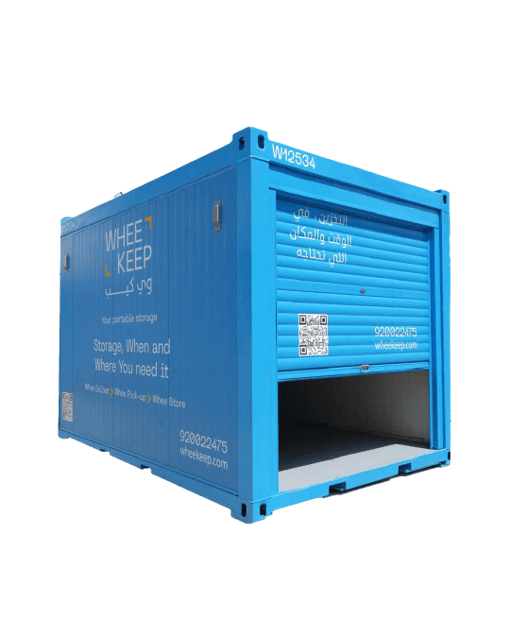
WheeKeep's facilities are designed for the Saudi climate, with temperature management built into the unit design rather than bolted on as an afterthought. For renters storing sensitive items, furniture during a home renovation in Riyadh, electronics between expatriate assignments, business inventory in Jeddah, this matters enormously. The WheeKeep unit pricing (from 599 SAR per month for a small unit of 2.4 × 1.5 × 2.35 m) reflects the cost of maintaining these standards rather than the artificially low prices sometimes offered by facilities that cut corners on climate infrastructure.
Feature 6: Structural Security and Facility Design
The physical construction of a storage facility is a security feature that most renters never think to evaluate. A building with weak perimeter walls, inadequate lighting, poor drainage that allows flooding, or structural vulnerabilities is a security risk regardless of how sophisticated its electronic systems are.
Perimeter Security and Physical Barriers
A properly secured storage facility should have a clearly defined perimeter with controlled entry and exit points. The perimeter itself, whether a wall, fencing, or a combination of both, should be of a height and construction that deters casual intrusion. In the Saudi context, where facilities are often located on the edges of industrial or commercial zones in areas like Riyadh's southern districts or Jeddah's industrial north, perimeter security matters because the surrounding environment may not provide natural surveillance.
Entry and exit points should be minimised and each one controlled. Multiple unmonitored entry points are a significant vulnerability. The fewer the entry points, the easier they are to monitor and the more any attempt at unauthorised access stands out.
Lighting as a Security Layer
Adequate lighting throughout a storage facility, in corridors, in car parks, at loading bays, and across the perimeter, is both a deterrent and a safety feature for renters accessing their units during evening hours. Motion-activated lighting in low-traffic areas reduces energy consumption while ensuring that any movement within the facility is immediately visible on CCTV and to any on-site personnel.
A facility visit at night is one of the most revealing assessments you can make. If corridors are poorly lit, if the car park feels unsafe after dark, or if the loading bay area has unlit corners, these are genuine security gaps. Saudi Arabia's extended summer evenings and the business community's late working hours mean evening access is common, not exceptional.
Flood and Fire Protection
Saudi Arabia's flash flooding events, which have affected Jeddah, Riyadh, and coastal Eastern Province locations with increasing frequency, represent a real risk to ground-floor storage. A secure facility should have drainage infrastructure designed to handle sudden heavy rainfall, with unit floors raised above the drainage threshold. Fire suppression systems, including sprinklers or dry chemical suppression appropriate for stored goods, are an additional structural security feature that protects against one of the most catastrophic storage risks.
Feature 7: On-Site Management and Staff Presence
Technology-only security has limits. A facility where the electronic systems are functioning but no human being is present to respond to an alarm, assist a customer with a problem, or intervene in an unusual situation is relying entirely on remote monitoring and response. For most renters, some level of on-site staffing during business hours is an important security feature.
What On-Site Staff Should Actually Be Doing
The presence of staff is not simply about having a person at a reception desk. Effective on-site management means regular physical patrols of corridors and perimeter areas, prompt response to access alarms or system alerts, immediate assistance for customers who encounter a problem during their visit, and a visible deterrent effect on anyone considering opportunistic theft or vandalism.
Ask any facility you are considering: What is the staff-to-unit ratio during business hours? Is there a manager on site at all times during operating hours, or is the facility sometimes unstaffed with only remote monitoring active? What is the protocol if a renter reports a concern or suspects their unit has been accessed without authorisation?
Customer Service as a Security Signal
The quality of a facility's customer service team is a genuine proxy for its overall management standards. A facility that responds quickly, communicates clearly, and resolves issues efficiently is one that is well-managed operationally. A facility with slow, evasive, or inconsistent customer service is often one where operational standards, including security maintenance, are similarly inconsistent.
WheeKeep's customer service model is built around direct responsiveness, with easy booking through its digital platform and straightforward communication for account changes, access queries, and unit transitions. For renters making decisions about where to store valuable or irreplaceable items, this operational quality is as important as any single security feature.
"The best secure storage Saudi Arabia has to offer is not measured by a single feature, it is measured by the consistency with which a facility maintains every layer of its security infrastructure, day after day, regardless of whether a customer is watching."
Feature 8: Insurance Options and Liability Clarity
Even the most secure facility in the world carries some residual risk. Equipment fails, natural disasters occur, and human error is always a factor. The eighth and often most overlooked security feature is the financial protection framework: what happens to your property if something goes wrong, and who bears the financial responsibility?
Understanding Storage Facility Liability
In Saudi Arabia, the legal framework governing storage facility liability for lost or damaged goods falls under general commercial law principles, with specific terms governed by the rental agreement you sign. Many standard storage contracts limit the facility's liability to a nominal amount per unit or exclude liability entirely for certain categories of loss (fire, flood, theft by third parties). Reading the liability clauses in any storage contract before signing is not optional, it is essential.
A transparent, customer-focused storage provider will explain its liability position clearly and without prompting. A facility that buries its liability exclusions in small print at the back of a lengthy contract is signalling that it does not expect its security systems to be fully reliable.
Contents Insurance for Stored Items
Many renters assume that their home contents insurance policy extends to items held in a storage unit. In practice, Saudi insurance policies vary considerably in how they treat off-site stored goods. Before placing valuable items in storage, check directly with your insurer whether your policy covers goods stored at a commercial storage facility, what the per-item and aggregate limits are, and whether there are any conditions (such as a minimum security standard at the facility) that the storage provider must meet for the policy to remain valid.
Some storage providers offer their own contents protection programmes as an add-on to the rental agreement. Evaluate these carefully: check what is covered, what is excluded, what the claims process looks like, and whether the premium represents good value relative to a standalone insurance policy. The goal is to ensure that every item you store is covered by a documented financial protection mechanism, not just by faith in the facility's security systems.
Documentation Before You Store
A practical security step that costs nothing is creating a photographic inventory of everything you place in storage before the unit door closes. Date-stamped photographs of each item, captured on a smartphone, provide the evidentiary foundation for any insurance claim. For business renters storing commercial inventory, a manifest document listing quantities, descriptions, and estimated values serves the same purpose and can be updated each time the inventory changes.
How to Compare Storage Facilities Using These Eight Features
Evaluating a storage facility across eight dimensions simultaneously is manageable if you use a structured comparison. The table below provides a scoring framework you can apply to any facility you are considering, including during an in-person visit or a phone enquiry. Score each feature from 1 (not present or inadequate) to 3 (fully present and verified), then compare total scores across providers.
| Security Feature | What to Verify | Score 1 | Score 2 | Score 3 |
|---|---|---|---|---|
| CCTV Coverage | Camera count, HD quality, retention period | ❌ Entry only | ⚠️ Most areas, SD quality | ✅ Full HD, all areas, 30+ day retention |
| Unit Padlock | Lock type, who holds keys, staff access policy | ❌ Basic padlock, renter provides own | ⚠️ Facility provides standard lock | ✅ Hardened lock included, renter-only key |
| Access Control | PIN/card system, access logs, visitor management | ❌ Manual guard check only | ⚠️ Shared code, no individual logs | ✅ Individual PIN, full access audit log |
| 24-Hour Access | Actual hours vs. stated hours, after-hours security | ❌ Business hours only | ⚠️ Extended hours, not 24/7 | ✅ Genuine 24/7 with full security active |
| Climate Control | Temperature + humidity targets, backup power, monitoring | ❌ No climate management | ⚠️ Air-conditioned corridor only | ✅ Full unit climate control, monitored |
| Structural Security | Perimeter, lighting, flood/fire protection | ❌ Open site, minimal lighting | ⚠️ Fenced, basic lighting | ✅ Secured perimeter, full lighting, fire/flood systems |
| On-Site Management | Staff presence, patrol frequency, response protocols | ❌ Remote only, no on-site staff | ⚠️ Staff present some hours | ✅ Full-hours staff, regular patrols |
| Insurance and Liability | Liability terms, contents cover options, claims process | ❌ Broad liability exclusions, no cover offered | ⚠️ Limited liability, basic cover available | ✅ Clear liability terms, comprehensive cover options |
A facility scoring 20 or above out of 24 represents a high standard. Any facility scoring below 16 carries meaningful security risk that should prompt you to look elsewhere or negotiate specific improvements before signing a contract.
What These Features Mean for Specific Storage Scenarios in Saudi Arabia
Security requirements are not identical for every type of renter. Understanding which features matter most for your specific situation helps you prioritise your evaluation and ask the right questions during a facility visit.
Families Relocating Within Riyadh or Jeddah
For a family storing household furniture and personal items during a move between districts in Riyadh, perhaps from an older apartment in Al-Malaz to a new villa in ROSHN's Sedra community, the most critical features are climate control (to protect wooden furniture and electronics during what may be a weeks-long storage period through summer), CCTV coverage, and individual unit access control. The liability and insurance framework matters too, since household items include irreplaceable personal possessions.
WheeKeep's Medium unit at 899 SAR a month (3.6 × 1.5 × 2.35 m) usually fits the furniture of a one or two-bedroom apartment and stays affordable for a one to three month transition. There is no long-term contract requirement, and you can cancel anytime, a meaningful advantage when relocation timelines are uncertain.
E-Commerce Sellers and Small Business Owners
For an e-commerce seller storing product inventory in Jeddah or a small business owner using a storage unit as a satellite warehouse, the access control and 24-hour access features are paramount. Business logistics do not always respect standard opening hours, and the ability to retrieve or deposit stock on a flexible schedule is operationally critical. CCTV coverage and documented access logs provide an important audit trail for business insurance purposes.
The large WheeKeep unit at 1,289 SAR per month (3.6 × 2.4 × 2.5 m) provides a meaningful commercial storage footprint. At this price point, the absence of a long-term contract means the storage cost can be treated as a variable operational expense rather than a fixed overhead, a significant advantage for businesses with seasonal inventory cycles.
Expatriates Between Assignments
Expatriates leaving Saudi Arabia temporarily, or arriving and waiting for accommodation to be confirmed, need a storage solution that combines security with flexibility. The risk profile here includes storing high-value items (electronics, imported furniture, personal collections) over potentially extended periods of several months. Climate control, individual unit security, and a clear insurance framework are the priority features. The on-demand return service offered by WheeKeep, where items can be retrieved and delivered when needed, adds a further layer of practical convenience that suits the unpredictable timelines of international relocation.
Contractors and Project Teams on Vision 2030 Sites
Teams working on projects in AlUla, NEOM, or Qiddiya often need to store equipment, tools, and materials near the project site rather than transporting them back to a major city between phases. In these contexts, structural security and climate control are the dominant concerns: equipment stored in extreme heat or inadequately secured facilities represents both a financial and a project-delivery risk.
Red Flags to Watch for When Visiting a Storage Facility
A physical visit to a storage facility before signing reveals things that no website or sales call will show you. The following observations during a site visit should raise immediate concerns.
- Rust or water staining on unit doors or walls. This indicates historical flooding or persistent moisture problems, both signs of inadequate climate and structural management.
- Corridor lighting that flickers or fails. Unreliable lighting suggests deferred maintenance, which typically extends to security systems as well.
- CCTV cameras with visible damage, incorrect pointing angles, or disconnected cables. Non-functional cameras are worse than no cameras, they create a false sense of security.
- Staff who cannot answer basic questions about the security systems. If the person at reception does not know how many cameras the facility has, how long footage is retained, or what the access control system is, management has not invested in staff training, a systemic quality signal.
- A contract with broad liability exclusions that the staff cannot explain. If staff say "don't worry, nothing ever happens here" rather than walking you through the liability terms, treat this as a warning.
- Units that smell musty or show signs of pest activity. Pest control is a storage security issue, rodents and insects can destroy stored goods as thoroughly as a theft.
- No visitor sign-in process. If you walked in without being asked to identify yourself, so can anyone else.
If you observe two or more of these red flags during a single site visit, the facility's security standards are almost certainly below what its marketing materials suggest. Move to the next option on your list.
Booking Secure Storage at WheeKeep: The Practical Next Step
WheeKeep has one facility in Jeddah and one in Riyadh. Both are run to the security standards described throughout this guide, with CCTV monitoring and padlock security included as standard rather than paid upgrades.
Pricing is straightforward and transparent: small units (2.4 × 1.5 × 2.35 m) from 599 SAR per month, medium units (3.6 × 1.5 × 2.35 m) at 899 SAR per month, and large units (3.6 × 2.4 × 2.5 m) at 1,289 SAR per month. Every unit comes with a padlock and CCTV coverage included, with an on-demand return service available when you need items retrieved and delivered. There are no long-term contracts, cancel anytime.
If you are currently comparing options for secure storage units in Saudi Arabia and want to assess whether WheeKeep's facilities match the eight-feature standard described in this guide, the most efficient approach is to book a unit directly through the WheeKeep website or contact the team to arrange a site visit. Given that the best units at each location fill quickly, particularly the medium units, which are the most in-demand configuration, early booking is genuinely advisable rather than merely a sales technique.
Explore WheeKeep storage units and book your space today, with flexible month-to-month terms and no long-term commitment required.
Frequently Asked Questions About Secure Storage in Saudi Arabia
What makes a storage facility genuinely secure in Saudi Arabia?
Genuine security in a Saudi storage facility combines multiple layers: full-coverage CCTV with HD cameras and meaningful footage retention, individual unit padlocks with renter-only key control, electronic access management with personal PINs and audit logs, climate control appropriate for the Gulf environment, structural integrity including flood and fire protection, adequate lighting throughout the facility, on-site staff management during business hours, and a clear insurance and liability framework. No single feature is sufficient on its own.
Is climate control really necessary for storage in Saudi Arabia?
Yes, and it is arguably the most important environmental protection available. Temperatures inside non-climate-controlled storage spaces in Riyadh and Jeddah regularly exceed safe limits for electronics, wooden furniture, leather goods, documents, and clothing during the May-to-September summer period. Climate control protects both the monetary value and the irreplaceable personal significance of stored items.
Do storage facilities in Saudi Arabia provide padlocks, or do renters need their own?
This varies by facility. Some require renters to purchase their own padlock, which leads to inconsistent quality across the facility. WheeKeep includes a padlock with every unit rental as a standard feature, ensuring a consistent minimum security level across all units.
What is the difference between 24-hour access and standard business-hours access?
Facilities offering genuine 24-hour access have invested in automated entry systems, full overnight CCTV monitoring, and adequate lighting for after-hours visits. Facilities restricted to business hours often rely on staff presence for security functions that would otherwise require automated infrastructure. For business users with variable operational schedules, the distinction is significant.
How do I know if a storage facility's CCTV system is actually working?
Ask directly: How many cameras are installed? Are they monitored in real time or recorded only? What is the footage retention period? Are the cameras HD resolution? A facility that cannot answer these questions specifically, or that deflects with vague assurances, should be treated with scepticism. During a site visit, look for cameras with indicator lights showing they are active, and check that coverage visibly extends throughout corridors and access points.
Can businesses store commercial inventory in a self-storage unit in Saudi Arabia?
Yes, self-storage units are widely used for commercial inventory, product samples, seasonal stock, office equipment, and business documents across Saudi Arabia. For e-commerce sellers operating through platforms like Noon or Amazon.sa, a storage unit can function as a flexible, cost-effective satellite warehouse. The key considerations for commercial use are access flexibility, unit size, climate control (for temperature-sensitive goods), and the facility's liability terms for commercially stored items.
What happens to my stored items if the storage facility closes or changes management?
This is governed by the terms of your rental agreement and Saudi commercial law. Before signing any storage contract, check the termination and notice provisions, the process for retrieving your items if the facility ceases to operate, and whether your rental payments are held in a manner that protects you in a business failure scenario. Choosing an established, reputable operator with multiple locations, rather than a single-site independent facility, reduces this risk.
How should I prepare my belongings before placing them in storage?
Clean all items before storage (particularly upholstered furniture and appliances, which can harbour moisture and attract pests), wrap fragile items in appropriate protective materials, disassemble large furniture where possible to maximise space efficiency, label all boxes clearly, and create a photographic inventory before the unit is closed. For electronics, remove batteries where practical. For clothing and textiles, use sealed bags or airtight containers to prevent moisture absorption.
Does my home contents insurance cover items stored at a commercial facility in Saudi Arabia?
Saudi insurance policies vary. Many standard home contents policies do not automatically extend full coverage to items stored at a commercial off-site facility, or they apply reduced per-item limits and aggregate caps. Check your specific policy wording with your insurer before storing valuable items. If your policy does not provide adequate coverage, ask the storage facility whether they offer a contents protection programme or can recommend a suitable standalone policy.
What is the best unit size for a standard apartment's worth of furniture?
For a typical one or two-bedroom apartment in Riyadh or Jeddah, a Medium unit (3.6 × 1.5 × 2.35 m) at 899 SAR a month is usually enough. It accommodates sofas, beds, wardrobes, dining furniture, and boxes of personal items when packed efficiently. Larger households or those needing to store additional business items alongside household goods should consider the large unit (3.6 × 2.4 × 2.5 m) at 1,289 SAR per month.
How quickly can I access my items after booking a storage unit?
With WheeKeep, booking and unit activation can be completed quickly through the online platform, with units accessible during facility operating hours from the point of activation. WheeKeep also offers an on-demand return service, meaning you can request specific items to be retrieved and delivered to you without needing to visit the facility in person, a significant convenience for renters who store items over longer periods and need occasional access without a full facility visit.
Key Takeaways for Choosing Secure Storage in Saudi Arabia
- Security is multi-layered. No single feature, not even CCTV, provides adequate protection on its own. Evaluate all eight features described in this guide before committing to a facility.
- Climate control is non-negotiable in the Saudi environment. The extreme temperatures and coastal humidity across Riyadh, Jeddah, Dammam, and other major cities make climate management essential for virtually any stored item.
- Use the scoring framework. The eight-feature comparison table in this guide gives you a structured, objective way to compare facilities and identify gaps before signing a contract.
- Visit in person before signing. A site visit reveals security gaps, maintenance standards, and operational quality that no website or phone call will disclose.
- Read the liability terms carefully. The security of your stored items is only as strong as the financial protection framework covering them if something goes wrong.
- Choose a facility with no long-term contract commitment. Flexibility in rental terms protects you if your storage needs change, your timeline shifts, or you find a better option.
- WheeKeep includes padlock and CCTV as standard. With units from 599 SAR a month, no long-term contract and on-demand return, WheeKeep meets the security standard described in this guide at its Jeddah and Riyadh facilities.