Business Storage in Saudi Arabia: Warehouse vs Self Storage
Warehousing vs self storage for your Saudi business — compare costs, flexibility, and access with this honest breakdown from WheeKeep's commercial storage experts.
Here is a question that trips up more Saudi business owners than almost any other operational decision: should you rent a warehouse or use self storage for your commercial goods? The two options sound similar on paper, but the practical experience of running stock out of a 5,000 sqm cold warehouse versus a flexible unit in central Riyadh is so different that the wrong choice can quietly cost you tens of thousands of riyals per year in wasted space, locked-in contracts, and lost time.
This guide is built for the business owner who is tired of vague comparisons. You will find a direct, step-by-step framework for evaluating business storage in Saudi Arabia, including the exact questions to ask, the numbers to compare, and the scenarios where each option genuinely wins. Whether you are running an e-commerce operation out of Jeddah, managing seasonal inventory for a retail branch in Khobar, or coordinating equipment storage for a Vision 2030 project in AlUla, the right storage model will save you money and reduce operational headache.
Step 1: Understand What Each Option Actually Is (Before You Compare Them)
Most businesses jump straight to cost comparisons without first clarifying what they are actually comparing. Warehouse storage and self storage are fundamentally different products designed for different operational contexts. Getting clear on the distinction is the prerequisite that saves you from choosing the wrong model at the start.
What Warehouse Storage in Saudi Arabia Actually Means
When people say "warehouse," they typically mean a large, purpose-built logistics facility, usually located in an industrial zone on the outskirts of a city. In Saudi Arabia, these cluster around King Abdulaziz Port in Jeddah, the industrial areas of Dammam and Jubail in the Eastern Province, and the logistics corridors along King Khalid Road and the Second Ring Road in Riyadh. Traditional warehousing is designed for bulk goods movement: pallets in, pallets out, often managed by third-party logistics providers (3PLs) who charge per pallet, per square metre, or per transaction.
The defining characteristics of a warehouse arrangement in the Saudi market are: long-term lease commitments (typically 12 months or more), minimum space requirements that make them impractical for small volumes, and limited access windows tied to facility operating hours. You are often renting raw, industrial space and then paying separately for racking, loading equipment, and sometimes staff. For a business moving hundreds of SKUs daily, this infrastructure makes sense. For an SME storing 200 product lines between sales cycles, it is expensive overkill.
What Self Storage for Businesses Actually Means
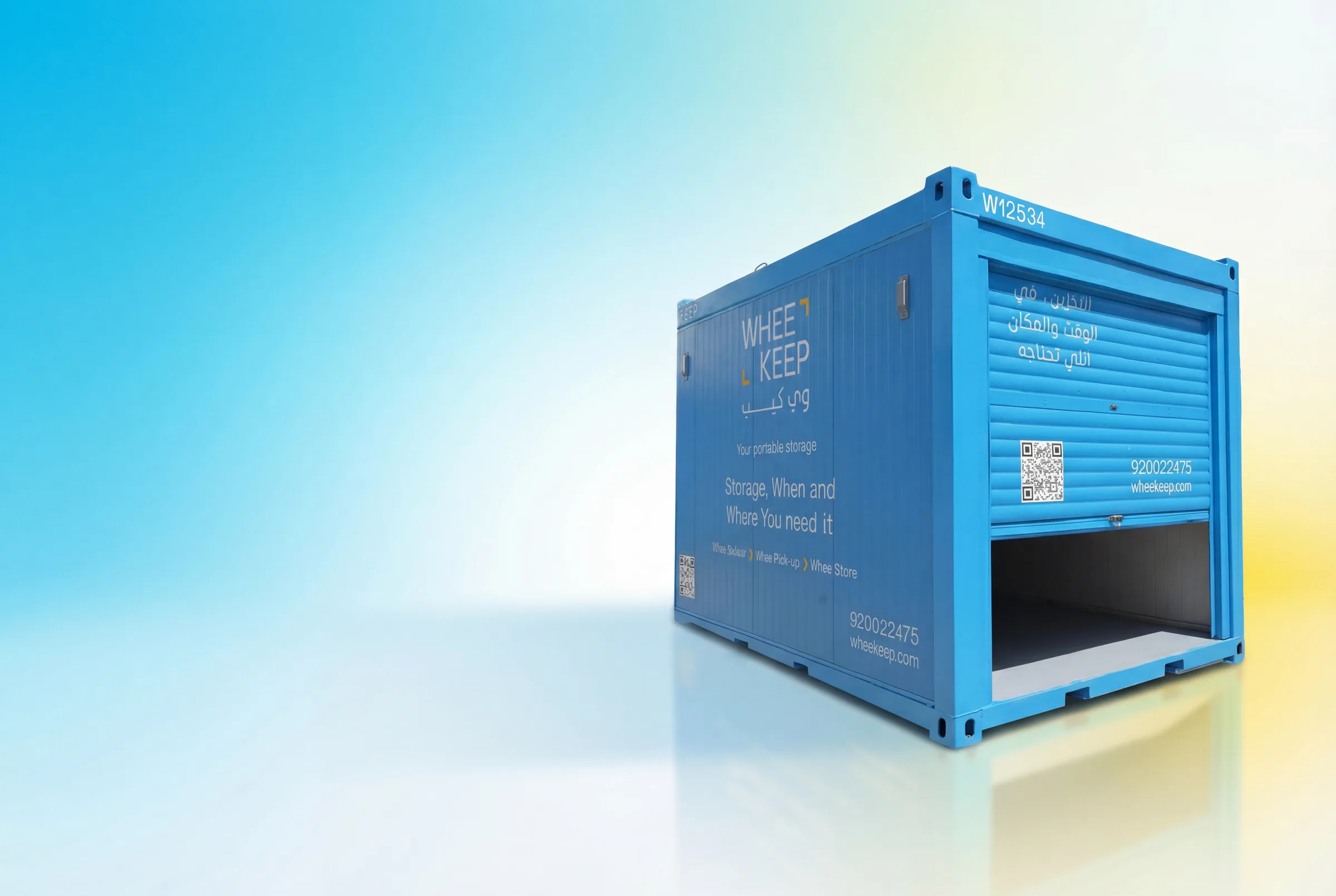
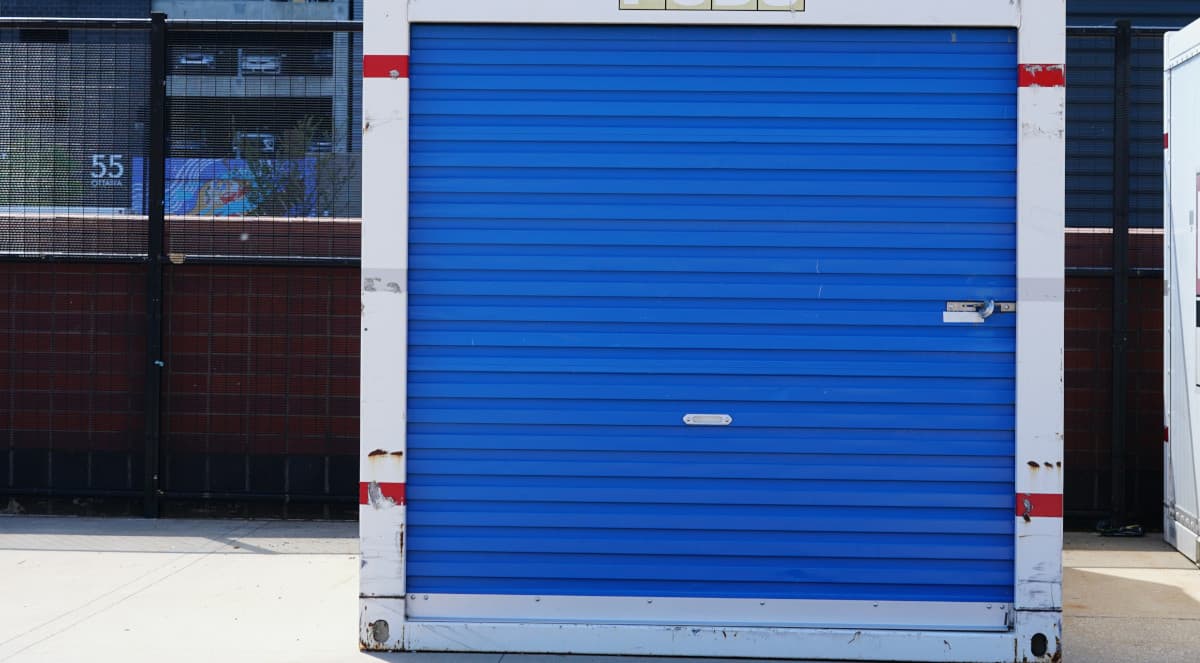
Commercial self storage is a private, lockable unit within a managed facility that you access directly, on your own schedule. The key difference from warehousing is that you are not buying into a logistics operation; you are renting clean, secure, climate-accessible space that you control. Modern self storage facilities like WheeKeep in Riyadh and Jeddah provide CCTV monitoring, padlock security, and on-demand retrieval, which means a business owner can visit their unit on a Tuesday afternoon to pull stock for an urgent order without going through a warehouse manager or filing a retrieval request.
For SME storage solutions in Saudi Arabia, this model has become increasingly practical as e-commerce, pop-up retail, and project-based contracting have grown across the Kingdom. A unit that costs 599 SAR per month for a small footprint (2.4×1.5×2.35 m) or 899 SAR per month for a medium unit (3.6×1.5×2.35 m, WheeKeep's most popular commercial size) is a fixed, predictable cost with no long-term lock-in and no separate staffing requirement.
Prerequisite knowledge needed: Before moving to the comparison framework in the following steps, confirm you know your approximate monthly stock volume (in cubic metres or pallet equivalents), your access frequency (how often you physically need to enter the storage space), and whether you need third-party fulfilment services or simply a place to keep goods safe and accessible.
Step 2: Map Your Actual Storage Needs Against a Practical Criteria Matrix
The biggest mistake Saudi businesses make when choosing storage is optimising for price per square metre without accounting for the hidden cost drivers that change the real total. Step 2 is about building an honest needs profile before you receive a single quote.
Work through the following criteria and score each one for your business. This becomes your comparison anchor in every subsequent conversation with a facility or logistics provider.
The Six Criteria That Actually Determine the Right Choice
1. Volume flexibility over time. Is your storage requirement stable month-to-month, or does it spike seasonally? Retailers in Saudi Arabia typically see a significant surge during Ramadan (usually falling between March and April on the Gregorian calendar), Eid Al-Fitr, Eid Al-Adha, and the Saudi National Day period on 23 September. If your stock volume doubles for two months and then drops back, a fixed warehouse lease forces you to pay for unused space in the quiet periods. Self storage units can be upgraded or added temporarily and then scaled back.
2. Access frequency. How many times per week does someone from your business need to physically handle the stored goods? Warehouses in industrial zones on the outskirts of Riyadh or Dammam may be 30-45 minutes from your office or shop. If you are retrieving stock daily, that travel time is a real operational cost. A centrally located self storage facility in Jeddah or Riyadh cuts that friction significantly.
3. Goods type and handling requirements. Do your goods require forklift handling, temperature control, or customs bonding? If yes, a specialist logistics warehouse is the right answer. If your inventory is boxed goods, equipment, sample stock, or documents, self storage handles it without the complexity.
4. Contract flexibility. How confident are you in your 12-month volume forecast? For businesses operating in Saudi Arabia's fast-moving market, particularly those tied to Vision 2030 project cycles or tourism seasonality (AlUla, the Red Sea Project), long-term warehouse leases carry real risk. WheeKeep's no long-term contract model (cancel anytime) means you are not locked in if a project ends early or a client brief changes.
5. Security and accountability. Who is responsible if goods go missing or are damaged? In a shared warehouse operated by a 3PL, liability clauses are complex and often favour the operator. In a self storage unit where you hold the only key, responsibility is clear and access is fully logged via CCTV.
6. Total cost of occupancy. The monthly rent figure is only one part of the cost. Add transport to and from the facility, staff time for retrieval, any additional services (racking, handling, loading), and the cost of minimum space requirements that force you to rent more than you need. Self storage pricing is transparent; warehouse pricing often is not.
| Criteria | Traditional Warehouse | Self Storage (WheeKeep) |
|---|---|---|
| Volume flexibility | ❌ Fixed lease, minimum space | ✅ Month-to-month, scalable |
| Access frequency | ⚠️ Depends on 3PL hours and location | ✅ Direct access, your schedule |
| Specialist handling (pallets, temp control) | ✅ Available with right 3PL | ❌ Not applicable |
| Contract flexibility | ❌ 12-month minimum typical | ✅ No lock-in, cancel anytime |
| Security model | ⚠️ Operator-controlled, shared liability | ✅ Padlock + CCTV, you hold the key |
| Pricing transparency | ❌ Multiple variable charges | ✅ Fixed monthly rate |
| Entry-level monthly cost (SAR) | ⚠️ Varies widely, often 3,000+ SAR | ✅ From 599 SAR/month |
| Suitability for e-commerce SMEs | ⚠️ Only at high volume | ✅ Purpose-fit for growing sellers |
Step 3: Calculate Your True Cost of Warehouse Storage in Saudi Arabia
Understanding the real cost of warehouse storage requires looking beyond the headline rate per square metre. Many Saudi businesses have discovered that their apparent savings on a cheaper warehouse lease evaporated once all associated costs were included. This step walks you through the full cost calculation so you can make a genuinely informed comparison.
The Hidden Cost Layers in Traditional Warehousing
Traditional warehouse storage in Saudi Arabia is priced in several ways: per square metre per year, per pallet position per month, or as part of a bundled 3PL service contract. In the major logistics hubs around Riyadh and the Eastern Province (Dammam, Khobar, Dhahran), industrial warehouse space in established zones commands significant premiums, particularly since Vision 2030's National Industrial Development and Logistics Programme (NIDLP) has driven demand for logistics infrastructure.
When building your true cost model, include the following line items:
- Base rent: The headline per-sqm or per-pallet rate in your lease or service contract.
- Minimum space commitment: Most warehouses require you to commit to a minimum footprint, often far more than an early-stage business actually needs. If you need 30 sqm but the minimum lease is 150 sqm, you are paying for 120 sqm of air.
- Fit-out and racking: Raw warehouse space typically does not include shelving, racking, or lighting. These are either installed at your cost or rented separately from the facility operator.
- Staff and operations: If you are managing your own warehouse, you need at least one warehouse operative. In Saudi Arabia, this is a real staffing cost that also involves Saudisation (Nitaqat) compliance considerations under the Ministry of Human Resources and Social Development.
- Transport and access costs: Industrial zones are not walking distance from your customers or your team. Factor in fuel, vehicle wear, and the time cost of every trip to and from the facility.
- Insurance: Commercial goods insurance is typically the tenant's responsibility in a warehouse lease. This is a separate cost that self storage arrangements may fold into the service or simplify significantly.
- Utility and service charges: Electricity, water, waste, and maintenance charges are often billed separately from the base rent in Saudi commercial leases.
Once you add these together, the "affordable" warehouse option often costs two to three times its headline rate per month. For a business storing 20-50 cubic metres of goods with moderate access frequency, a medium self storage unit at 899 SAR per month with no additional charges will frequently beat a warehouse arrangement on total cost of occupancy, not just flexibility.
If your business is at the stage where you need inventory storage in Saudi Arabia but are not yet running daily pallet movements, you are almost certainly in the self storage sweet spot. WheeKeep's medium unit at 899 SAR per month includes CCTV monitoring, your own padlock, and on-demand access. Book your unit online at WheeKeep and start storing within days, not weeks.
Step 4: Identify Which Business Types Genuinely Benefit from Each Model
There is no universally correct answer between warehousing and self storage for Saudi businesses. The right model depends on your specific operational profile. This step provides a practical decision guide based on business type and volume, so you can identify your category and stop second-guessing.
When Traditional Warehousing Is the Right Answer
Warehousing makes sense when your business has reached a volume and operational complexity that genuinely requires it. Specifically, consider a traditional warehouse arrangement when:
- You are importing goods through Jeddah Islamic Port or King Abdulaziz Port in Dammam and need bonded storage or customs clearance handling on-site.
- Your daily fulfilment volume is high enough that having a logistics team on-site is cost-justified, typically 50+ orders per day for e-commerce operations.
- You are storing goods that require specialised conditions: temperature-controlled pharmaceutical products (relevant to SFDA-regulated businesses), bulk raw materials, or heavy industrial equipment that needs forklift access.
- You are a manufacturer or distributor supplying large retail chains like Panda, Tamimi, or Carrefour, where your logistics contract requires certified warehouse operations.
- Your business model is built around a fixed, predictable stock volume with no seasonal spikes, making a long-term lease financially sensible.
When Self Storage Is the Smarter Commercial Choice
Commercial self storage is the more practical solution for a wide range of Saudi businesses, particularly the SME sector that forms the backbone of the Kingdom's non-oil economy. Self storage is the right answer when:
- You run an e-commerce business on Noon, Amazon.sa, or your own platform and you need to store 200-2,000 SKUs without committing to a full warehouse lease.
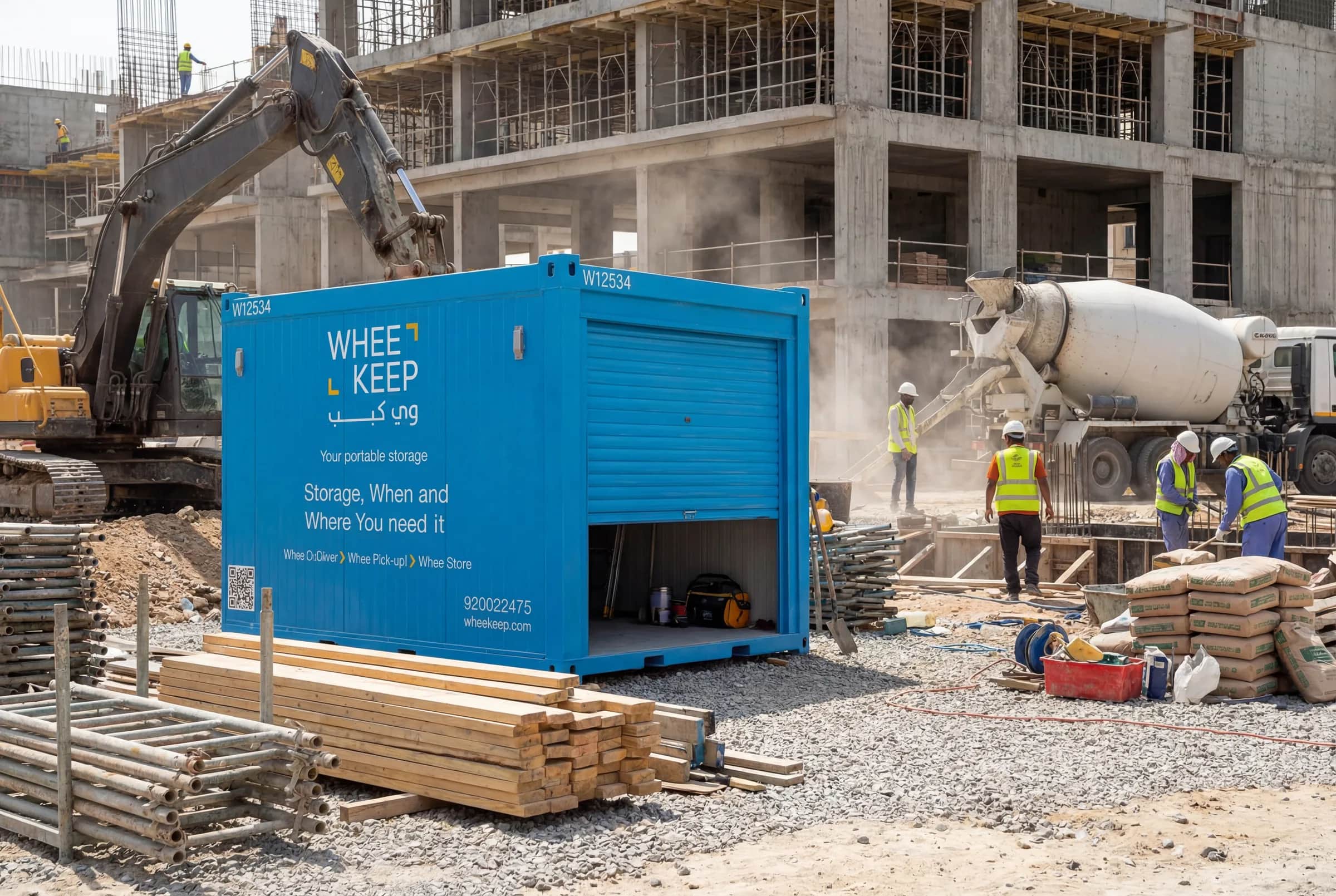
- You are a contractor, consultant, or project team working on a time-limited assignment, such as a fit-out project in NEOM, a construction contract in Diriyah Gate, or a site installation in AlUla, and you need equipment storage for the duration of the project only.
- You operate a seasonal retail business that stocks up heavily for Ramadan, Eid, or National Day and needs overflow space for two to three months at a time.
- You are a small importer or distributor who brings in a container of goods every quarter and needs somewhere clean and accessible to hold stock between sales cycles.
- You are relocating your business premises and need a gap-bridging storage solution while your new office or showroom is fitted out.
- You are a professional services firm (architecture, events, media) that stores equipment, samples, or documents that you access irregularly but cannot keep in a small office.
For all of these scenarios, the economics of self storage are compelling. A large WheeKeep unit at 1,289 SAR per month (3.6×2.4×2.5 m) gives you roughly 21.6 cubic metres of clean, secured space with no staffing requirement, no utility bills, and no minimum term. That is a fraction of what a comparable warehouse footprint costs when you include all the associated overheads.
Step 5: Evaluate Location and Access Practically, Not Just on a Map
One of the most underestimated factors in choosing commercial storage in Riyadh or any other Saudi city is the real-world access experience, not the PIN on Google Maps. A facility that looks close on paper may add 40 minutes of driving time in Riyadh's King Fahad Road congestion. A warehouse in an industrial estate in Yanbu may be technically available but require a security clearance process that adds an hour to every visit.
How to Assess Location Practically
Work through this location assessment for any storage facility you are seriously considering:
- Drive the route at the time you will actually use it. Saudi cities experience severe traffic congestion during certain hours. In Riyadh, the periods around 07:30-09:00 and 16:00-19:00 can turn a 15-minute drive into 45 minutes. If you plan to collect stock on your way to a client meeting, test the actual journey time.
- Check the operating hours against your schedule. WheeKeep operates Sunday to Thursday 09:00-21:00 and Saturday 12:00-20:00. Many industrial warehouses operate shorter windows, typically 08:00-17:00 on weekdays only, which creates problems if you need evening or weekend access. Friday is a day off across Saudi Arabia and most commercial facilities are closed.
- Assess the loading access. Can you park a van directly at the unit? Is there a lift to upper floors? For businesses moving stock frequently, the physical logistics of loading and unloading matter enormously.
- Confirm which city and district the facility is actually in. WheeKeep has two Riyadh locations (WheeKeep Riyadh at 24.55849608344948, 46.474216866772544 and WheeKeep Boulevard Hub at 24.779993152312215, 46.60675958995404) and two locations serving Jeddah and surrounding areas (WheeKeep Jeddah Hub at 21.61865076556873, 39.13091624240242 and WheeKeep Asfan at 21.808103739333482, 39.43077899716639). Choose the location closest to where you actually deliver from, not just the cheapest available unit.
Why Location Matters More for Self Storage Than for Warehousing
Warehousing is generally accessed by logistics staff as part of a structured process. Self storage is typically accessed by business owners, sole traders, and small teams who are also managing customer calls, deliveries, and daily operations. For this audience, a facility that adds 30 minutes of friction to every visit is a facility that gets used less, which means your stored goods become harder to manage efficiently. The convenience factor is not a luxury add-on for self storage. It is a core part of the value.
For businesses operating across Jeddah, Riyadh, or the Makkah-Madinah corridor, WheeKeep's multi-location network means you can often find a facility that is genuinely close to your operational base. This is a significant practical advantage over a single industrial warehouse on the outskirts of a city.
Step 6: Understand the Contract and Commitment Difference
The contractual structure of your storage arrangement has direct implications for your business's financial flexibility and risk profile. This is an area where self storage and warehousing diverge sharply, and where many Saudi businesses have made costly mistakes by not reading the terms carefully before signing.
What Warehouse Contracts Typically Look Like in Saudi Arabia
Commercial warehouse leases in Saudi Arabia are governed by standard commercial tenancy law under the Ministry of Justice's real estate framework. Typical features of a warehouse lease include:
- A minimum term of 12 months, often requiring full upfront payment or post-dated cheques for the entire lease period, a common practice in the Saudi commercial property market.
- Limited break clauses, meaning that if your business circumstances change (a major client leaves, a project ends, your product line shifts), you are committed to paying for space you may no longer need.
- Restoration clauses requiring you to return the space to its original condition at the end of the lease, which can mean removing racking, repainting, and repairing any damage caused during occupation.
- Rent review mechanisms that may increase your costs at renewal, often linked to RICS-assessed market rates or negotiated benchmarks.
- Service charge disputes, which are a common source of conflict in Saudi commercial leases, particularly for shared facilities where maintenance costs are apportioned between tenants.
How Self Storage Contracts Work at WheeKeep
WheeKeep's commercial storage model is built around the principle that businesses should not be punished for flexibility. The key contractual features that make self storage suitable for SME storage solutions in Saudi Arabia are:
- No long-term contract. You pay monthly and can cancel anytime. There are no break clauses to negotiate because there is no lock-in period to break.
- Transparent pricing. The monthly rate is fixed and covers the unit, CCTV monitoring, and padlock security. There are no service charges, utility surprises, or restoration obligations at the end.
- Scalable commitment. If your storage needs grow, you move to a larger unit. If they shrink, you downsize. You are never forced to pay for space you do not need.
- Immediate availability. Unlike warehouse leases that require legal review, stamp duty, and handover processes, a WheeKeep unit can typically be booked and accessed within days.
For a business that is scaling, pivoting, or simply operating in Saudi Arabia's dynamic commercial environment, this contractual flexibility is worth real money. The ability to right-size your storage month by month is not just a convenience. It is a genuine financial risk management tool.
Step 7: Apply the Decision Framework to Three Common Saudi Business Scenarios
Abstract comparisons only go so far. This step applies the full framework to three realistic business scenarios drawn from the kinds of businesses WheeKeep serves across Riyadh, Jeddah, and beyond. Use the scenario that most closely matches your situation as a starting point for your own analysis.
Scenario A: The Jeddah E-Commerce Seller
A small business owner in north Jeddah runs an online fashion accessories brand, selling through Noon and her own website. She imports a container of goods from Turkey and China every three to four months, stores the stock, and fulfils 15-30 orders per day herself with one part-time assistant. Her current arrangement is renting a spare room in her family's villa for storage, which is running out of space.
Warehouse analysis: The minimum warehouse lease available near Jeddah Islamic Port is far more space and cost than she needs. A 3PL service would add fulfilment fees on top of storage, eating significantly into her margins. A 12-month commitment is risky given that her product range is evolving.
Self storage analysis: A medium WheeKeep unit at the Jeddah Hub (899 SAR/month) gives her approximately 12.7 cubic metres of organised, secure space, enough for a full container shipment's worth of boxed accessories. She can access the unit whenever she needs to pack and dispatch orders, and she can scale up to a large unit (1,289 SAR/month) during peak import periods without any contract renegotiation.
Verdict: Self storage is clearly the right answer. The total cost is a small fraction of a warehouse lease, the flexibility matches her business stage, and the location is practical for daily access.
Scenario B: The Riyadh Fit-Out Contractor
A fit-out and interior design contractor based in Riyadh is working on two simultaneous projects: a commercial office build in the King Abdullah Financial District and a hospitality fit-out in Diriyah Gate. Both projects run for approximately eight months. He needs somewhere to store tools, materials, and sample boards that cannot be left on-site overnight.
Warehouse analysis: A warehouse lease would likely require a 12-month minimum, leaving him paying for four months of storage after both projects end. The industrial zone location would also add significant daily travel time.
Self storage analysis: WheeKeep Boulevard Hub in Riyadh (GPS: 24.779993152312215, 46.60675958995404) is well-positioned for projects in the northern Riyadh commercial corridor. A large unit at 1,289 SAR/month for eight months costs 10,312 SAR total. He can cancel when both projects are complete with no penalty, and the CCTV security provides peace of mind for valuable tools and materials.
Verdict: Self storage wins on flexibility, cost, and practical location. The project-based nature of the business makes a warehouse lease financially irresponsible.
Scenario C: The Dammam Import Distributor
A distributor in the Eastern Province imports industrial components from South Korea and supplies them to petrochemical companies across ARAMCO's supply chain. He receives three to four 20-foot containers per month and ships on to clients in Jubail and Yanbu. His monthly throughput is approximately 80 pallet positions.
Warehouse analysis: This is a genuine warehousing use case. The volume, pallet handling requirements, and supply chain integration with major industrial clients justify a formal 3PL arrangement near the port. The investment in warehouse infrastructure is proportionate to the business scale.
Self storage analysis: Self storage is not suitable for this volume and handling requirement. Pallet movements at this scale require forklift access and loading dock infrastructure that a self storage facility is not designed to provide.
Verdict: Warehouse storage is correct here. This is exactly the business profile where traditional warehousing earns its cost.
Step 8: Set Up Your Self Storage Unit for Maximum Business Efficiency
If you have worked through the previous steps and concluded that self storage is the right model for your business, this final operational step ensures you get maximum value from your unit from day one. Poor organisation in a self storage unit leads to wasted access time, misplaced stock, and frustration. Done well, a self storage unit can function as a highly efficient satellite stock room.
Organising Your Unit for Commercial Use
Follow these setup principles when moving business goods into your WheeKeep unit:
- Map the unit before you fill it. Sketch a simple layout plan showing where each product category, equipment type, or document batch will live. Allocate the front third of the unit to goods you access most frequently, and push slow-moving stock to the back.
- Use standardised boxes throughout. Mixed box sizes create stacking problems and wasted vertical space. Choose one or two standard carton dimensions and stack them in uniform columns. In a medium WheeKeep unit (3.6×1.5 m floor plan, 2.35 m height), proper stacking can double your effective storage capacity compared to haphazard arrangement.
- Label everything on the short face, not the top. When boxes are stacked, you can only see the front face. Label each box with category, SKU range, and date received. A waterproof marker on the outside face takes 10 seconds per box and saves minutes of searching on every visit.
- Install freestanding shelving for smaller items. Lightweight metal shelving units (available from Ikea, ACE Hardware, or Jarir in Saudi Arabia) transform a storage unit from a box pile into a proper stock room. Keep the shelving freestanding so it can be reconfigured or moved without damaging the unit walls.
- Create a simple inventory log. A shared Google Sheet or a basic inventory app updated on each visit tells you what is in the unit without requiring a physical check. This is especially valuable if multiple team members access the unit.
- Use the padlock consistently. WheeKeep provides a padlock as part of the unit. Make it a non-negotiable habit that the padlock is secured every time you leave, regardless of how quickly you plan to return.
- Photograph the unit contents on initial load-in. A dated photo record of what went in is useful for insurance purposes and as a reference for your inventory log.
Common Mistakes to Avoid in Commercial Self Storage
- Overloading without a weight check. Stacking too many heavy cartons can create safety hazards. Check the floor load rating with the facility team before loading heavy equipment or dense product.
- Storing perishables or temperature-sensitive goods without checking the facility's specifications. WheeKeep's units are protected from Saudi Arabia's extreme summer temperatures, but if your goods have specific temperature requirements, confirm the unit's environmental specifications before booking.
- Using the unit as a dumping ground rather than a managed stock room. The biggest operational failure in business self storage is treating the unit as a place to put things you cannot deal with right now. Every item in the unit should have a clear purpose, a review date, and an exit plan.
- Not communicating access arrangements to your team. If multiple employees need to access the unit, ensure everyone knows the address, the GPS coordinates, the unit number, and the padlock combination. Undocumented access creates delays at the worst times.
Ready to set up your commercial storage unit? WheeKeep has locations across Riyadh and Jeddah, with units available from 599 SAR per month, no long-term contract, and no hidden charges. Book your business storage unit with WheeKeep today and have it ready within days.
The Honest Verdict: Which Model Fits Most Saudi Businesses Right Now
After working through all eight steps of this framework, a clear pattern emerges. The majority of Saudi SMEs, e-commerce operators, contractors, and growing businesses are better served by self storage than by traditional warehouse arrangements, at least until their operational volume reaches a scale that genuinely justifies warehouse infrastructure.
The Saudi business environment is moving fast. Vision 2030 is creating new commercial opportunities in sectors and cities that did not have significant commercial activity five years ago. Businesses working in tourism, entertainment, technology, retail, and professional services are scaling quickly but unevenly, with periods of high demand followed by consolidation. In this environment, contractual flexibility is not just convenient. It is a genuine competitive advantage.
For business storage in Saudi Arabia, self storage at WheeKeep delivers the combination of transparent pricing, flexible terms, secure access, and practical locations that the majority of SMEs need. The monthly cost from 599 SAR, with no lock-in, no hidden charges, and facilities in both Riyadh and Jeddah, makes it one of the most accessible commercial storage options available in the Kingdom today.
The cases where traditional warehousing genuinely wins are real, but they are also specific: high-volume importers, pallet-based distributors, and businesses with specialist handling requirements. If that is not your business profile, you are likely paying warehouse prices for warehouse complexity that you do not need.
Frequently Asked Questions: Business Storage in Saudi Arabia
What is the difference between self storage and a warehouse for a Saudi business?
Self storage provides a private, lockable unit within a managed facility that you access directly on your own schedule, with no minimum volume requirement. A warehouse is a large industrial space designed for bulk goods movement, usually managed by a third-party logistics provider, with longer lease commitments, specialist equipment, and higher entry costs. For most SMEs and e-commerce sellers in Saudi Arabia, self storage is the more practical and cost-efficient option.
How much does business self storage cost in Saudi Arabia?
WheeKeep's commercial units start from 599 SAR per month for a small unit (2.4×1.5×2.35 m), 899 SAR per month for a medium unit (3.6×1.5×2.35 m, the most popular for commercial customers), and 1,289 SAR per month for a large unit (3.6×2.4×2.5 m). All prices include CCTV monitoring and padlock security. There are no long-term contracts, so you pay monthly and can cancel anytime.
Is self storage in Saudi Arabia suitable for inventory storage?
Yes, for most SME inventory profiles. If your stock consists of boxed goods, equipment, samples, documents, or retail merchandise, a self storage unit is well-suited for inventory storage in Saudi Arabia. It becomes less suitable when you need daily pallet movements, forklift access, or integration with a logistics management system at scale.
Can I access my storage unit outside normal business hours?
WheeKeep operates Sunday to Thursday from 09:00 to 21:00 and Saturday from 12:00 to 20:00. This extended evening window is more flexible than most industrial warehouse operations, which typically close at 17:00. Friday is a rest day and the facility is closed. Check specific unit access terms when booking.
Does WheeKeep have storage locations in both Riyadh and Jeddah?
Yes. WheeKeep operates four locations: WheeKeep Riyadh (GPS: 24.55849608344948, 46.474216866772544), WheeKeep Boulevard Hub in Riyadh (GPS: 24.779993152312215, 46.60675958995404), WheeKeep Jeddah Hub (GPS: 21.61865076556873, 39.13091624240242), and WheeKeep Asfan (GPS: 21.808103739333482, 39.43077899716639), which serves the Jeddah-Makkah corridor.
Is there a minimum storage period with WheeKeep?
WheeKeep does not require a long-term contract. You can store on a month-to-month basis and cancel anytime. This makes it particularly suitable for seasonal businesses, project-based contractors, and SMEs whose storage needs fluctuate.
What types of business goods can be stored in a self storage unit?
Self storage units are suitable for boxed retail inventory, office equipment and furniture, documents and archives, tools and trade equipment, sample products and display materials, and e-commerce stock. Goods that cannot typically be stored include perishable food items, flammable chemicals, live animals, and anything that requires specialist regulatory storage (such as SFDA-regulated pharmaceuticals with specific temperature requirements).
How do I calculate what size storage unit my business needs?
Start by estimating the total cubic metre volume of your goods. For boxed inventory, multiply your average carton volume by the number of cartons you plan to store, then add approximately 25% for access space within the unit. A medium WheeKeep unit (3.6×1.5×2.35 m) offers roughly 12.7 cubic metres of space, enough for several hundred standard cartons depending on their dimensions. A large unit (3.6×2.4×2.5 m) offers approximately 21.6 cubic metres.
Is self storage secure enough for valuable business goods?
WheeKeep's units include CCTV monitoring and a padlock for each unit. The padlock means only you (and anyone you specifically authorise) can access your unit. This is often more secure than shared warehouse spaces where multiple operators and their staff have general access to the facility floor.
Can I use self storage as my registered business address in Saudi Arabia?
No. Self storage is a physical goods storage solution, not a business address or registered premises. For Ministry of Commerce (MoC) business registration purposes, you need a separate commercial address. Self storage can supplement your registered business operations but cannot replace a formal business premises for registration or licensing purposes.
What is the best storage solution for an e-commerce seller in Saudi Arabia?
For e-commerce sellers on Noon, Amazon.sa, or independent platforms, a medium or large WheeKeep self storage unit is typically the most cost-effective solution. It provides secure, accessible inventory storage without the overhead of a warehouse lease, and the no-contract model lets you scale up for peak periods (Ramadan, Eid, National Day) and back down during quieter months.
How quickly can I get access to a WheeKeep storage unit for my business?
WheeKeep units can typically be booked online and accessed within a matter of days, significantly faster than negotiating and signing a commercial warehouse lease. This speed of setup is particularly valuable for businesses with an immediate storage need, such as a retailer receiving an unexpected container shipment or a contractor mobilising quickly to a new project site.
Key Takeaways: Making the Right Storage Decision for Your Saudi Business
- Most Saudi SMEs are better served by self storage than by traditional warehousing until their operational volume reaches a scale that genuinely justifies warehouse infrastructure, specialist handling, and long-term lease commitments.
- The true cost of warehouse storage in Saudi Arabia is significantly higher than the headline rate once you add minimum space requirements, fit-out, staffing, transport, utilities, and restoration obligations.
- Self storage at WheeKeep starts from 599 SAR per month with no long-term contract, no hidden charges, CCTV monitoring, and padlock security included. Medium units at 899 SAR/month and large units at 1,289 SAR/month are available across Riyadh and Jeddah.
- Location and access hours matter as much as price. WheeKeep's extended operating hours (until 21:00 Sunday-Thursday) and multiple city locations make it genuinely practical for business owners managing busy schedules.
- Contract flexibility is a financial risk management tool, not just a convenience. In Saudi Arabia's fast-moving commercial environment, the ability to scale storage up or down month by month without penalty is a real competitive advantage.
- Traditional warehousing is the right answer for high-volume importers, pallet-based distributors, and businesses with specialist handling or regulatory storage requirements. If that is not your profile, you are likely overpaying for complexity you do not need.
- A well-organised self storage unit with standardised boxes, freestanding shelving, and a simple inventory log can function as an efficient commercial stock room at a fraction of the cost of a leased warehouse space.