9 Reasons Expats in Saudi Arabia Use Self Storage
Relocating as an expat in Saudi Arabia? Discover 9 compelling reasons self-storage makes every career transition smoother, cheaper, and less stressful.
Most expatriates in Saudi Arabia treat self-storage as a last resort, something you turn to when a move goes wrong, a shipment is delayed, or a landlord gives you shorter notice than expected. That framing is costing expats money, time, and a great deal of unnecessary stress. The professionals who navigate career moves in the Kingdom most smoothly treat storage not as a backup plan but as a deliberate tool, built into every relocation from the start.
Saudi Arabia is one of the most dynamic environments for expatriate careers on the planet. Vision 2030 has fundamentally reshaped the labour market, drawing talent into Riyadh, Jeddah, the Eastern Province, and an expanding list of giga-project sites including NEOM, AlUla, and the Red Sea Project. With that dynamism comes movement: contract renewals, inter-city transfers, short-term assignments, employer changes, and the occasional unplanned departure. Each of those transitions involves belongings, and how you manage your belongings directly affects how cleanly you manage your career.
This article presents nine reasons, ranked by practical impact, why storage for expats in Saudi Arabia belongs in every relocation plan. Each reason reflects patterns seen repeatedly among the expatriate community across Riyadh, Jeddah, Dammam, Khobar, and beyond. Read through the full list and you will find at least three that apply directly to your next move.
1. Furnished Accommodation Reality Gaps Make Interim Storage Non-Negotiable
The single biggest practical shock for newly arrived expatriates in Saudi Arabia is the gap between what a furnished flat is advertised as containing and what is actually present on arrival. This is not a complaint about dishonesty; it is a structural feature of the Kingdom's rental market. Landlords define "furnished" differently depending on the district, the age of the building, and the previous tenant. A furnished unit in Al Hamra, Jeddah may include a full kitchen, sofas, and white goods. A furnished unit in Al Malqa, Riyadh may mean a bed frame and a ceiling fan.
Expatriates arriving with their own household goods from a previous posting face an immediate problem: their belongings either duplicate what is in the flat or are incompatible with the space. Shipping a container from London, Mumbai, or Manila only to discover the flat already has a dining set creates an overcrowding problem on day one.
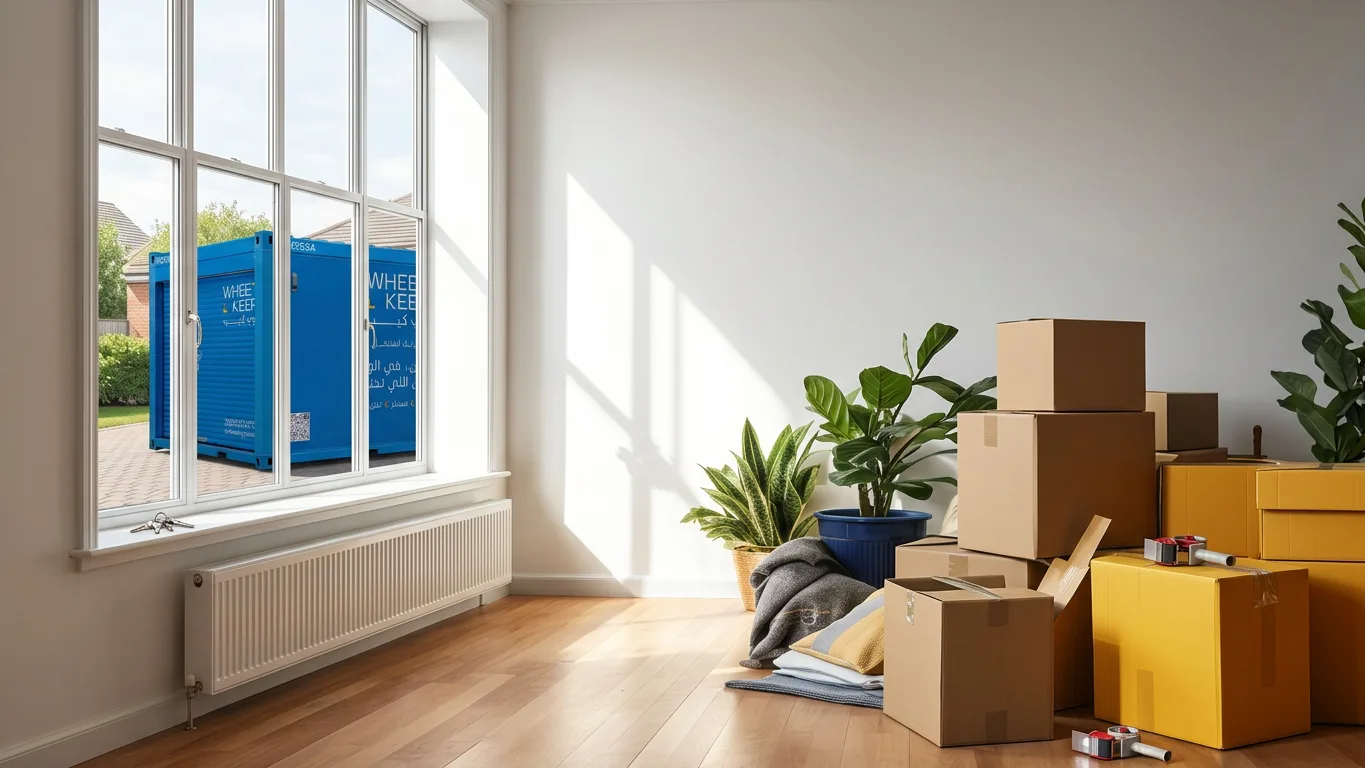
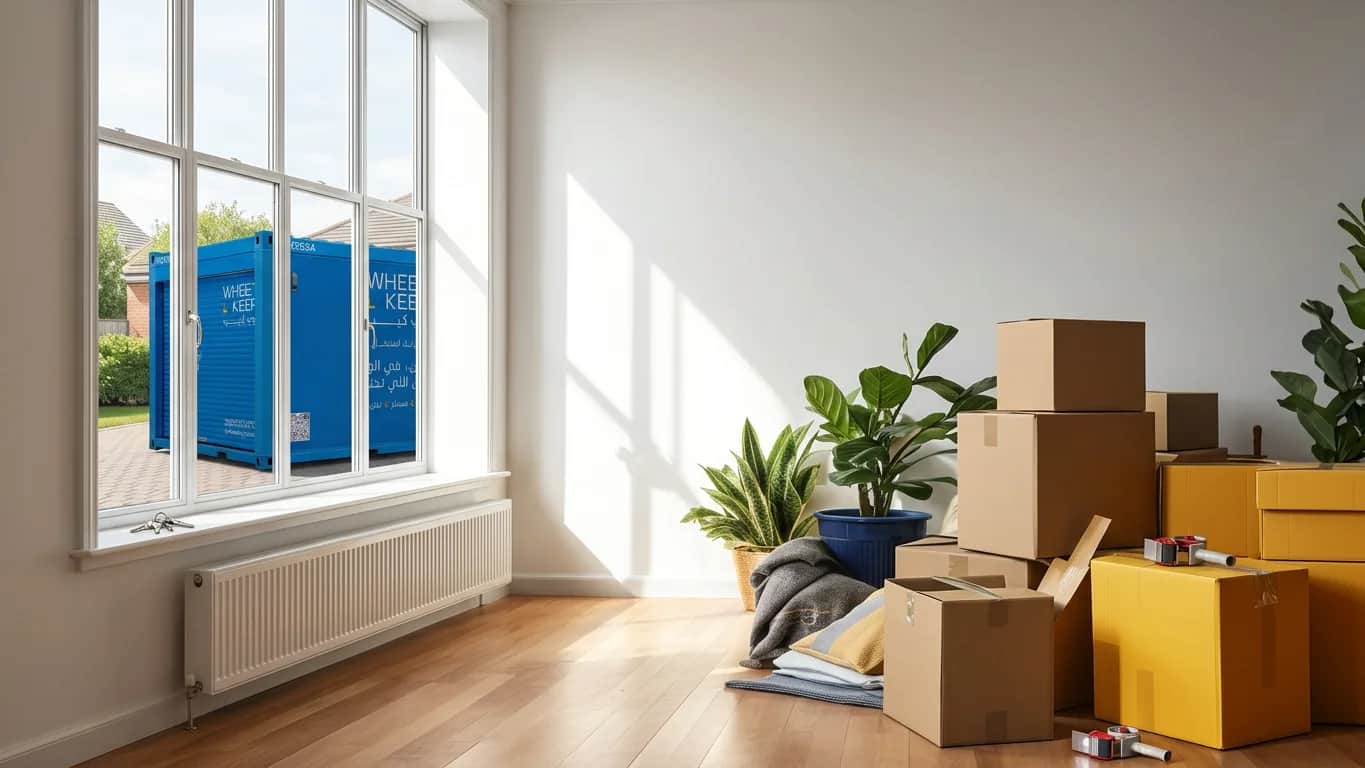
How self-storage solves this: Rather than forcing a decision on what to sell, donate, or abandon within the first week of arrival, a self-storage unit creates breathing room. You move into the furnished flat with the essentials, place the duplicated or oversized items into storage, and spend the first two to three months understanding the local property market properly. Once you have secured a long-term unfurnished lease on your own terms, you retrieve everything and furnish the space exactly as you want it.
This approach is particularly valuable in Jeddah, where the rental market in desirable districts like Al Rawdah, Al Zahraa, and Al Shati moves quickly and good unfurnished units rarely stay available for long. Having your belongings safely stored at WheeKeep's Jeddah Hub means you can move on any opportunity within days rather than waiting for a shipment to clear King Abdulaziz Port.
The financial logic is equally sound. A medium WheeKeep storage unit at 899 SAR per month is a fraction of the premium you pay to stay in a serviced apartment while waiting for a permanent residence to become available. Two months of strategic storage almost always costs less than the difference between serviced and standard accommodation rates in the same district.
2. Contract Gaps Between Assignments Create a Storage Window You Must Plan For
Saudi Arabia's employment landscape for expatriates is project-driven to a degree that is unusual even by Gulf standards. Contracts for roles connected to Vision 2030 giga-projects, oil and gas work in the Eastern Province, healthcare expansions in Riyadh, or construction across NEOM and Diriyah Gate are commonly structured in fixed terms: one year, two years, or tied to a project phase. When one contract ends and the next begins, there is frequently a gap.
That gap might be three weeks while HR processes a new Iqama. It might be six weeks while a family returns home to arrange schooling. It could be two to three months while a professional completes a notice period and negotiates a start date. During that window, the question of what to do with a flat full of belongings becomes urgent and expensive if you have not planned ahead.
The common approach is to keep the lease running through the gap, paying rent on a flat you are not occupying. In premium districts of Riyadh such as Al Olaya or Diplomatic Quarter, this can mean paying 15,000 to 25,000 SAR per month for an empty flat. Alternatively, expats attempt a rushed sale of furniture through WhatsApp groups, almost always at a significant loss, only to rebuy at full price when the next assignment starts.
What actually works: Vacate the flat on schedule. Move your belongings into a large WheeKeep storage unit at 1,289 SAR per month, which operates on flexible terms with no long-term contract commitment. The unit holds everything securely, with CCTV monitoring and a padlock included, while you travel. When the new contract begins and a new lease is signed, you retrieve everything in a single coordinated move. The savings compared to holding an empty lease or replacing sold furniture typically run into tens of thousands of riyals.
Key takeaway: Flexible storage rental in Saudi Arabia is not a cost; it is a cost-avoidance tool when managed around known contract gap windows.
3. Expat Storage in Riyadh Solves the Inter-City Transfer Problem
Saudi Arabia's Vision 2030 economy is not confined to one city, and neither are expatriate careers. A professional who starts with an energy company in Dhahran may be transferred to a Riyadh headquarters role. A healthcare specialist placed in a Jeddah hospital system may be seconded to a new facility in Madinah or Taif. A project manager working on Qiddiya near Riyadh may move to AlUla for the next phase of the same cultural tourism initiative.
Inter-city transfers in Saudi Arabia present a specific logistical challenge: the distances are substantial (Riyadh to Jeddah is roughly 950 km), the new city's rental market may be completely unfamiliar, and the employer often provides a short-term hotel or serviced apartment for the first few weeks rather than a permanent residence. Attempting to move an entire household across that distance into a temporary address is both impractical and expensive.
Expat storage in Riyadh at WheeKeep's two Riyadh locations (the main Riyadh hub and the Boulevard Hub) provides a practical staging solution. When a transfer to Riyadh is confirmed, a professional arriving from Jeddah or the Eastern Province can place belongings in a Riyadh storage unit on arrival, settle into temporary accommodation to evaluate the city's neighbourhoods, and then move into a permanent flat once the right property is identified. The reverse works equally well: a professional leaving Riyadh for Jeddah can use WheeKeep's Jeddah Hub or Asfan location to stage belongings while securing a lease in the new city.
This approach also accommodates family timing mismatches, which are common in Saudi Arabia's expatriate community. It is not unusual for the employed spouse to transfer first while the family follows after the school year ends. A child enrolled at GEMS or the British International School in Riyadh cannot simply move mid-term. The working parent transfers, the belongings go into storage, and the family reunites once the academic calendar permits. Storage becomes the logistical bridge between two timelines that cannot be perfectly synchronised.
4. Shipping Delays at Saudi Ports Make Storage a Financial Hedge
Saudi Arabia's ports handle enormous volumes of cargo. Jeddah Islamic Port is the busiest port on the Red Sea and one of the largest in the Middle East. King Abdulaziz Port in Dammam handles the bulk of cargo for the Eastern Province. Both ports experience periodic congestion, particularly around major holiday periods including Ramadan, Eid Al-Fitr, Eid Al-Adha, and the National Day period around 23 September.
International household goods shipments for expatriates are subject to customs clearance processes overseen by the Saudi Customs Authority (ZATCA), and clearance timelines can vary from a few days to several weeks depending on documentation completeness, the nature of goods, and port congestion at the time of arrival. An expatriate who has planned for a two-week clearance and signed a lease starting on a fixed date can find themselves in a furnished serviced apartment at 600 to 900 SAR per night waiting for clearance to complete.
How storage functions as a hedge: Rather than timing a lease start to coincide precisely with an expected shipment arrival date, experienced expatriates build a buffer. The lease starts when a suitable flat is secured. If the shipment clears early, it goes directly into a WheeKeep storage unit near the new home rather than into an unprepared flat with no fixtures, curtains, or internet connection yet installed. If it clears late, the buffer period in temporary accommodation is shorter because the expat is already in the flat managing fit-out.
This decoupling of shipment timing from lease timing removes one of the most stressful variables in an international move. The storage unit absorbs the timing uncertainty so the expat does not have to.
For professionals arriving through Jeddah Islamic Port, expat storage in Jeddah at WheeKeep's Jeddah Hub (coordinates: 21.61865076556873, 39.13091624240242) is positioned to receive goods directly from a clearing agent and hold them until the permanent residence is ready for full move-in.
5. Saudi Lease Structures Favour Storage Over Flexible Renting
Saudi Arabia's residential lease market operates on conventions that differ from what most expatriates are accustomed to. Leases are commonly structured as annual contracts paid in a small number of post-dated cheques, sometimes as few as one to four cheques covering the full year. This structure reflects the local banking and property culture, and while the Ejar platform managed by the Ministry of Housing has introduced more transparency and standardisation to the rental process, the fundamental annual commitment structure remains.
For an expatriate on a one or two-year contract, committing to an annual lease is a straightforward decision. But for professionals on six-month project attachments, short-term secondments, or assignments with uncertain renewal prospects, the annual commitment creates a mismatch. Breaking a lease in Saudi Arabia carries penalties, and finding a subletting arrangement that satisfies the landlord and the Ejar registration requirements is not always straightforward.
The strategic response: Professionals on short-term or uncertain assignments increasingly choose to live in serviced apartments or short-term furnished units for the assignment duration, storing the bulk of their household goods in a WheeKeep unit rather than shipping everything in and out. This approach is particularly cost-effective when the assignment is under nine months. The cost of storage plus serviced accommodation for six months is typically lower than the combined cost of a full lease commitment plus the risk of penalties for early termination.
WheeKeep's pricing structure, with no long-term contract and a cancel-anytime model, mirrors the flexibility that Saudi Arabia's lease market does not always provide. A small unit at 599 SAR per month for a professional storing non-essential items during a six-month secondment represents a manageable, predictable cost with no exit penalty.
6. Seasonal and Ramadan Moves Benefit from Staged Storage Planning
The rhythm of expatriate life in Saudi Arabia follows the Hijri calendar as much as it follows the Gregorian one. Ramadan, which shifts approximately eleven days earlier each year relative to the Gregorian calendar, creates a predictable but annually shifting period during which business activity slows significantly, working hours change, and many expatriate families travel. Eid Al-Fitr and Eid Al-Adha each generate mass movement of residents out of major cities and then back in.
For expatriates in the middle of a relocation, these periods create complications. Moving companies are heavily booked or operating at reduced capacity. Landlords may be difficult to reach. Government offices processing documents operate on reduced hours. A move planned for late Ramadan or the first week of Eid can easily slip by two to three weeks through no fault of the expat's planning.
Storage as a buffer for seasonal timing: Placing household goods into a WheeKeep unit before Ramadan begins, then completing the actual move into a new flat after Eid when the market returns to normal activity, is a practical approach used by seasoned expatriates across Riyadh and Jeddah. It avoids the premium pricing that some moving companies charge during peak periods, allows the expat to travel for Eid without worrying about a flat full of belongings in a property whose lease has already ended, and removes the pressure of trying to coordinate landlords, utility connections, and removal companies during a period when responsiveness is low.
The WheeKeep booking process is designed to accommodate this kind of planned staging. Units are available on a month-to-month basis, so an expat who needs storage from the 15th of Sha'ban through to the 10th of Shawwal is not forced into a six-month commitment to cover what is effectively a six-week need.
If you are approaching a seasonal transition and need to bridge a move around Ramadan or Eid, book a WheeKeep unit online now and confirm your dates. Units in Riyadh and Jeddah fill quickly in the weeks preceding major holidays.
7. Protecting High-Value Expatriate Assets During Transition
Expatriates in Saudi Arabia, particularly those in senior professional roles, frequently arrive with high-value personal property: specialist equipment, art, musical instruments, extensive book collections, high-end electronics, or furniture of sentimental or monetary significance. These items present a specific challenge during relocations because they are not well-suited to the kind of casual storage solutions that suffice for general household goods.
Leaving high-value items in an unfurnished flat during a gap between leases, or in a friend's garage, or in an informal storage arrangement, carries genuine risk. Saudi Arabia's summer climate is extreme, with temperatures in Riyadh and the Eastern Province regularly reaching 45 to 50°C between June and August. Humidity on the Jeddah and Dammam coasts creates a secondary risk for wood, leather, electronics, and paper-based items. An environment that is neither climate-managed nor secured is genuinely damaging to quality belongings over even a short storage period.
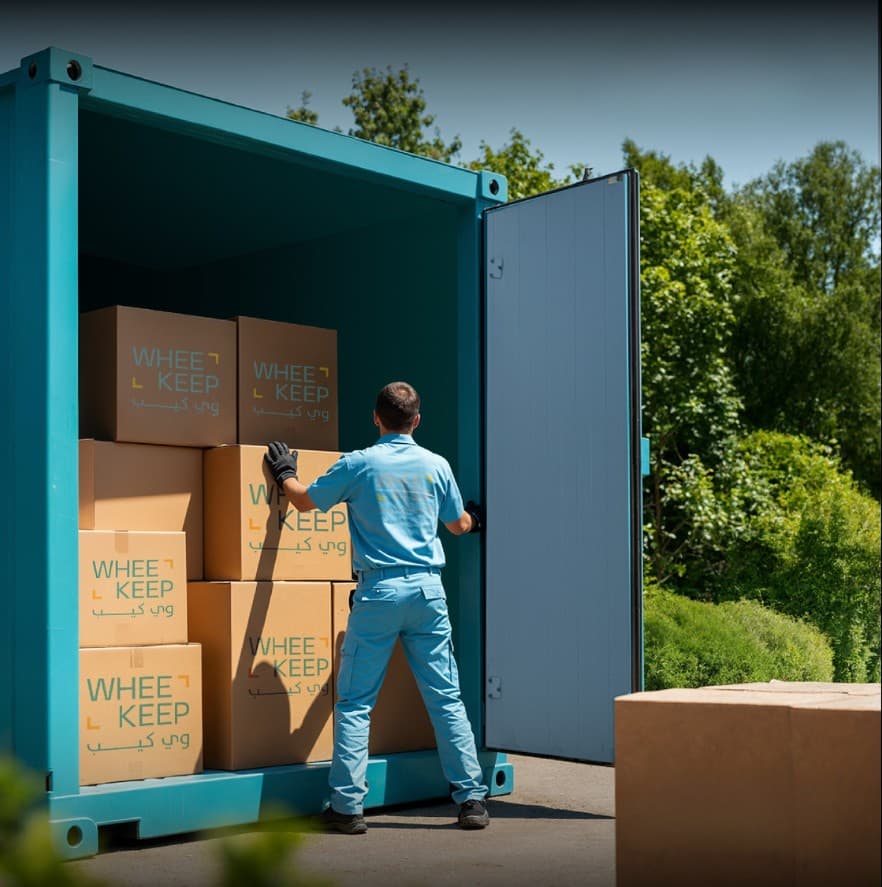
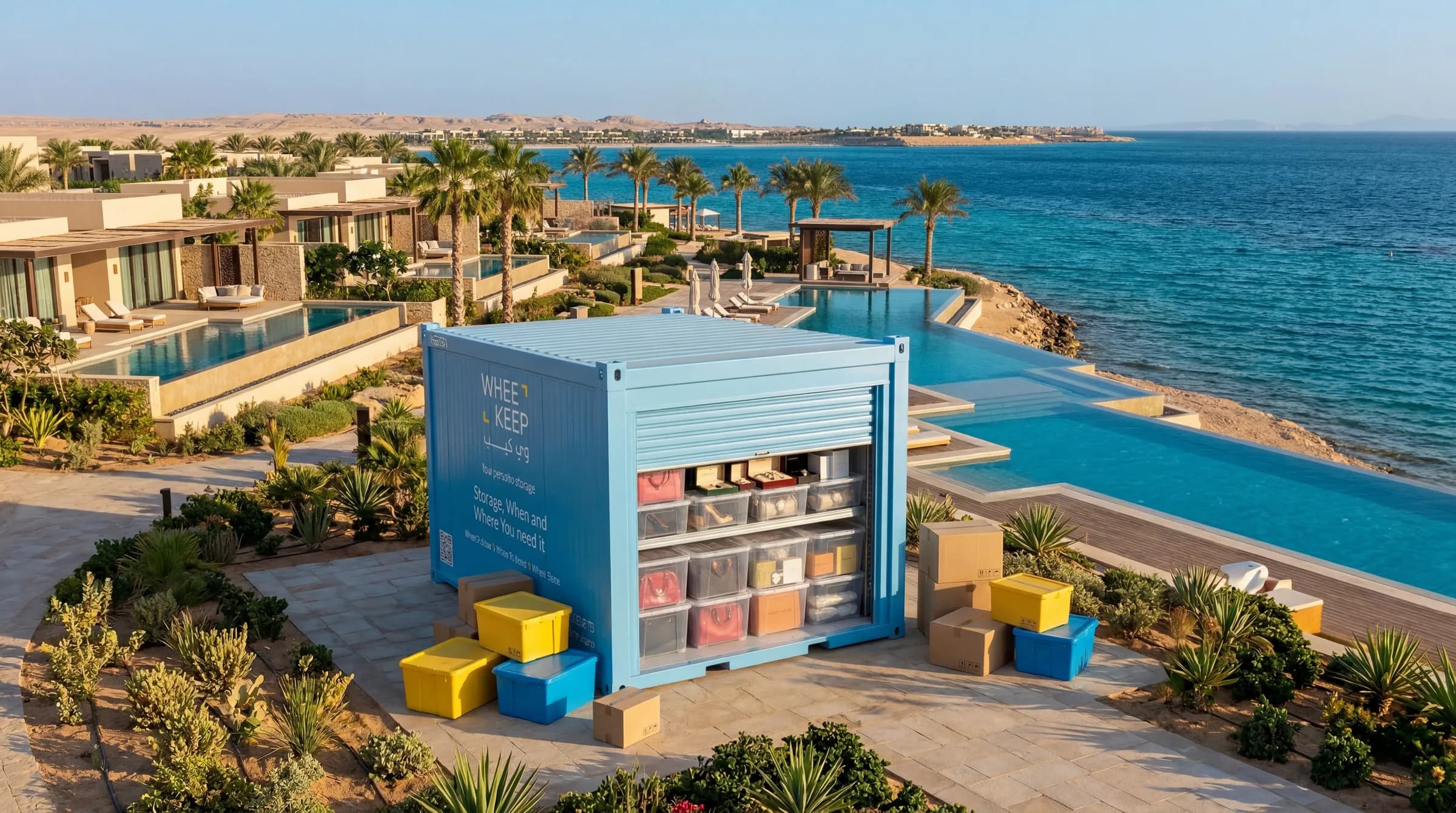
What professional storage provides: WheeKeep units are secured with CCTV monitoring and individual padlocks, providing a documented chain of access that informal arrangements cannot match. The controlled environment of a purpose-built storage facility is significantly better suited to preserving quality items than any informal alternative. For an expatriate who has invested substantially in furnishing a home to a high standard, professional storage is not a luxury cost but a protection cost.
The calculation is straightforward: a large WheeKeep storage unit at 1,289 SAR per month provides a secure, monitored environment for the full contents of a well-furnished flat. Replacing even a single damaged piece of quality furniture or a ruined collection of professional reference materials would cost multiples of that monthly rate. Storage is the cheaper option when value is properly accounted for.
| WheeKeep Unit Size | Dimensions | Monthly Price | Best For Expats |
|---|---|---|---|
| Small | 2.4 × 1.5 × 2.35 m | 599 SAR | Singles or couples on short-term assignments; storing non-essential items during a secondment ✅ |
| Medium | 3.6 × 1.5 × 2.35 m | 899 SAR | Couples or small families bridging between leases; inter-city transfer staging ✅ |
| Large | 3.6 × 2.4 × 2.5 m | 1,289 SAR | Families with full household contents; professionals with high-value or specialist items ✅ |
All units include padlock, CCTV monitoring, and on-demand return. No long-term contract required.
8. Expat Storage in Jeddah and Riyadh Supports Families With Children in School
One of the most underappreciated complications of expatriate relocations in Saudi Arabia is the impact of school calendars on family logistics. International schools in Jeddah, including the British International School Jeddah, Jeddah Prep and Grammar School, and the International Schools Group campuses, operate on academic year cycles that do not align with employment contract timelines. The same is true for the major international schools in Riyadh such as the British International School Riyadh, the Riyadh International Community School, and various American and European curriculum schools across the city.
When a career move requires relocation, the family rarely has the luxury of moving exactly when the employer needs the professional to start. Children enrolled in Year 9 GCSE preparation or in the middle of an IB diploma programme cannot simply change schools mid-year without significant academic disruption. This creates a common scenario: the employed parent relocates, taking the role and finding temporary accommodation, while the family remains in the current city for the rest of the school term.
This split creates a storage problem that most families do not anticipate. The family home needs to be vacated at the end of the lease. The new city's permanent flat cannot be fully furnished because the family is not yet present to provide input on the property selection. The belongings need somewhere to go during the interim period that is not the back of a rented van, a friend's spare room, or an overpriced self-storage option in a facility that is not purpose-built.
The WheeKeep solution for families: The household contents go into a large unit at the WheeKeep location nearest the destination city. The employed parent moves into a furnished short-term rental in the new city, selecting it based on proximity to a good school and a suitable residential area for the whole family. When the school year ends and the family relocates, the move into the permanent flat happens in a single, coordinated day from the storage unit rather than a chaotic multi-shipment process.
This model is used extensively by expatriate families in both Jeddah and Riyadh, and it significantly reduces the emotional difficulty of a relocation by keeping the children's experience of "moving day" to a single, well-prepared event rather than a drawn-out process of incremental disruption.
9. Moving Storage Solutions in Saudi Arabia Enable a Cleaner Departure When the Assignment Ends
Every expatriate assignment in Saudi Arabia eventually ends. Sometimes it ends as planned, with a contract completion date known months in advance. Sometimes it ends abruptly, through a company restructure, a project cancellation, or a personal decision to return home or move to a new posting. Regardless of how it ends, the logistical challenge of managing a flat full of belongings under time pressure is one of the most stressful experiences an expatriate can face.
Saudi Arabia's Iqama regulations mean that an expatriate whose employment ends must finalise their exit status within a defined period. The Ministry of Human Resources and Social Development administers the employment and residency framework that governs this timeline. Rushing an international shipment, negotiating with a clearing agent, arranging a final flat inspection with a landlord, and managing the bureaucratic requirements of an exit simultaneously is a recipe for costly mistakes.
A container shipment to Europe, North America, or Asia from Saudi Arabia takes weeks to arrange properly. Items that cannot be shipped need to be sold or given away. Items of sentimental value that cannot be sold but are not worth the shipping cost need an alternative. And all of this needs to happen while the professional is still working their final weeks, managing handovers, and completing the exit formalities that Saudi employment law requires.
What actually works at departure: Vacate the flat on schedule. Place everything into a WheeKeep storage unit. Complete the exit formalities, the work handover, and the Iqama cancellation process without the pressure of a flat full of belongings running up daily accommodation costs. Then, from a position of calm, arrange the international shipment, the furniture sale, and the distribution of remaining items. When the shipment is organised and the container is booked, the clearing agent collects directly from the storage unit.
This approach saves money in two ways. First, it allows the expat to vacate the flat on schedule rather than extending the lease by one or two months to manage the departure logistics. Second, it allows a measured, unhurried approach to deciding what is worth shipping versus selling versus donating, which almost always results in a smaller, cheaper shipment container than the panicked "put everything in a box" approach that time pressure produces.
Moving storage solutions in Saudi Arabia are most valuable precisely at this departure point, because the financial and emotional stakes are highest and the time available is shortest. Building storage into the departure plan from the moment a contract end date is known transforms the final chapter of an expatriate assignment from a stressful scramble into a manageable sequence of decisions.
WheeKeep operates Sunday through Thursday from 09:00 to 21:00, and on Saturday from 12:00 to 20:00. For expats managing departure timelines around working hours and government office schedules, the extended evening access on weekdays is particularly useful. Units are available at the Riyadh Hub, Boulevard Hub in Riyadh, Jeddah Hub, and the Asfan location near Jeddah. Reserve your unit now and lock in your dates before the peak departure season fills availability.
The Compounding Benefit: How These Nine Reasons Reinforce Each Other
Each of the nine reasons above is independently sufficient to justify including self-storage in an expatriate relocation plan. But their real power is cumulative. An expatriate who uses storage to bridge a contract gap (reason 2) is also protecting high-value assets during that gap (reason 7) and positioning themselves to make a better property decision when the next assignment begins (reason 1). A family using storage to manage a school-year transition (reason 8) is simultaneously solving the inter-city transfer problem (reason 3) and creating a cleaner departure framework (reason 9).
Storage for expats in Saudi Arabia functions as a logistics multiplier. Every benefit it provides in one area reduces friction in another. The professional who builds storage into every career transition from the start develops a relocation process that is cheaper, less stressful, and more flexible than the reactive approach that most expatriates default to.
The practical framework looks like this: at the moment a career move is confirmed, identify the gap period between current lease end and new permanent accommodation start. Size that gap honestly, adding buffer for port delays, Ramadan timing, school calendar constraints, and the realistic pace of the Saudi rental market. Book a WheeKeep unit for that gap period. Plan the move into storage and out of storage as two separate, well-prepared events rather than a single frantic relocation day. The result is a process that actually works in the Saudi context, rather than a process designed for a rental market with flexible month-to-month leases and efficient customs clearance.
Choosing the Right WheeKeep Location for Your Career Move
WheeKeep operates four locations across Saudi Arabia's two largest cities, each positioned to serve different expatriate communities and career corridors.
| Location | Best For | Expat Career Context |
|---|---|---|
| WheeKeep Jeddah Hub | Arrivals via Jeddah Islamic Port; expats in Al Hamra, Al Rawdah, Al Shati districts | Healthcare, education, commercial sector expats; Red Sea Project-adjacent roles ✅ |
| WheeKeep Asfan | North Jeddah and Makkah corridor; expats in outer Jeddah districts | Construction, logistics, and pilgrimage economy professionals ✅ |
| WheeKeep Riyadh Hub | South and central Riyadh; expats in Al Malaz, Al Naseem, Al Batha areas | Government sector, SABIC, Aramco Riyadh offices, Vision 2030 authority secondees ✅ |
| WheeKeep Boulevard Hub (Riyadh) | North Riyadh; expats in Al Olaya, Al Malqa, Diplomatic Quarter, King Abdullah Financial District | Finance, consulting, international corporate roles; KAFD-based professionals ✅ |
All four locations operate on the same pricing structure with no long-term contract commitment and on-demand return access included. WheeKeep is open Sunday through Thursday from 09:00 to 21:00 and Saturday from 12:00 to 20:00.
Frequently Asked Questions: Self-Storage for Expatriates in Saudi Arabia
How does flexible storage rental in Saudi Arabia work for expatriates on short-term contracts?
WheeKeep offers month-to-month storage rental with no long-term commitment. You pay monthly and cancel when your assignment ends or your move is complete. This matches the short-term contract structures common in Saudi Arabia's project-driven economy, and it means you are never locked into a commitment that outlasts your need.
What is included in a WheeKeep storage unit?
Every WheeKeep unit includes a padlock for security, CCTV monitoring, and on-demand return access. You can retrieve your belongings during business hours (Sunday to Thursday 09:00 to 21:00, Saturday 12:00 to 20:00) without needing to schedule in advance for standard access.
Is expat storage in Jeddah available near the port for incoming shipments?
Yes. The WheeKeep Jeddah Hub is positioned to receive goods that have cleared Jeddah Islamic Port. Your clearing agent can coordinate delivery from the port directly to the storage unit, which is a standard arrangement for expatriates whose permanent residence is not yet ready for move-in.
Can I access my storage unit during Ramadan?
WheeKeep operates during Ramadan, though business hours in Saudi Arabia generally shift during the holy month. It is advisable to confirm current operating hours directly with WheeKeep closer to the date, as Ramadan hours may differ from the standard schedule listed above.
How much does expat storage in Riyadh cost per month?
WheeKeep offers three unit sizes in Riyadh: small (599 SAR/month), medium (899 SAR/month, most popular), and large (1,289 SAR/month). All units are available on a month-to-month basis with no minimum term requirement.
What items should expatriates store rather than ship internationally?
Items that are expensive to ship but valuable to retain, such as quality furniture, seasonal clothing, specialist equipment, and sentimental items, are well suited to storage rather than international shipment. Items of genuinely high monetary value that you will need at your next posting are worth shipping. Self-storage is the practical middle ground for everything that does not clearly belong in either category.
Can a family use storage when one parent transfers ahead of the school year?
Absolutely. This is one of the most common use cases for expatriate storage in Saudi Arabia. The household contents go into a large WheeKeep unit, the transferring parent moves into furnished temporary accommodation in the new city, and the family reunites and moves into the permanent flat at the end of the school year. The storage unit acts as the logistical bridge between the two timelines.
What is the best storage unit size for a couple without children?
For a couple with a standard two-bedroom flat's worth of belongings, a medium unit (3.6 × 1.5 × 2.35 m, 899 SAR/month) is typically sufficient for a full household storage requirement. A small unit (599 SAR/month) works well if you are storing non-essential items while living in furnished accommodation during a transition period.
How do I handle storage when leaving Saudi Arabia permanently?
Book a WheeKeep unit at the city you are departing from. Vacate your flat on schedule and move everything into storage. Complete your exit formalities and work handover without the pressure of an occupied flat. Then arrange your international shipment from the storage unit at a measured pace, deciding carefully what is worth shipping versus selling versus donating. Your clearing agent can collect directly from the WheeKeep location.
Is storage useful for giga-project workers at NEOM or AlUla?
Yes. Professionals on assignment at NEOM, AlUla, the Red Sea Project, or Qiddiya often work on site for extended periods while their families remain in Riyadh or Jeddah. Storage at the nearest WheeKeep location to the family home allows flexible management of household goods during the assignment period, particularly when the site assignment is finite and a return to city life is planned.
How does WheeKeep's pricing compare to extending a lease during a transition gap?
A large WheeKeep unit at 1,289 SAR per month is substantially cheaper than maintaining an unfurnished or partly-furnished flat in a premium Riyadh or Jeddah district during a transition gap. Even a mid-tier district flat at 8,000 to 12,000 SAR per month means that two months of unnecessary lease costs far exceeds two months of storage costs. The financial case for storage over lease extension is clear in virtually every scenario.
Can WheeKeep accommodate business equipment as well as household goods?
Yes. WheeKeep units are suitable for both household goods and business equipment including office furniture, electronics, tools, and commercial inventory. Professionals who operate a side business or maintain professional equipment alongside household belongings can store both in a single unit, sized appropriately for the combined volume.
Key Takeaways for Expatriates Using Self-Storage in Saudi Arabia
- Storage is a planning tool, not a backup plan. Expatriates who build storage into their relocation from the start consistently report smoother, cheaper transitions than those who treat it as a last resort.
- The contract gap window is the highest-value use case. Paying 899 to 1,289 SAR per month for storage during a contract gap beats paying 10,000 to 25,000 SAR per month for an empty flat in every financial scenario.
- Saudi Arabia's port, lease, and seasonal dynamics all create timing mismatches that storage resolves. Shipment delays at Jeddah Islamic Port, annual lease structures, and Ramadan timing all benefit from a storage buffer.
- Inter-city transfers between Riyadh, Jeddah, Dammam, and giga-project sites are cleaner when storage stages the move rather than forcing an immediate permanent decision in an unfamiliar city.
- Family school calendars and employment start dates rarely align. Storage bridges the gap between when the adult needs to move and when the family can move.
- Departure management is significantly cleaner when storage decouples flat vacation from shipping logistics and exit formalities.
- WheeKeep operates four locations across Riyadh and Jeddah with flexible month-to-month terms, CCTV security, padlock inclusion, and on-demand return. Units start at 599 SAR per month with no long-term commitment.
- Book early. Units near major international schools and in premium residential corridors fill quickly around key transition periods including Eid, the end of the academic year, and the September National Day period.
Whether you are arriving in the Kingdom for the first time, navigating a transfer between Riyadh and Jeddah, managing a family whose school year and your contract end date do not line up, or planning your eventual departure, moving storage solutions in Saudi Arabia from WheeKeep give you the flexibility to move on your terms rather than the terms imposed by lease structures, shipping timelines, and seasonal congestion. Book your WheeKeep storage unit today and build the breathing room your next career move deserves.