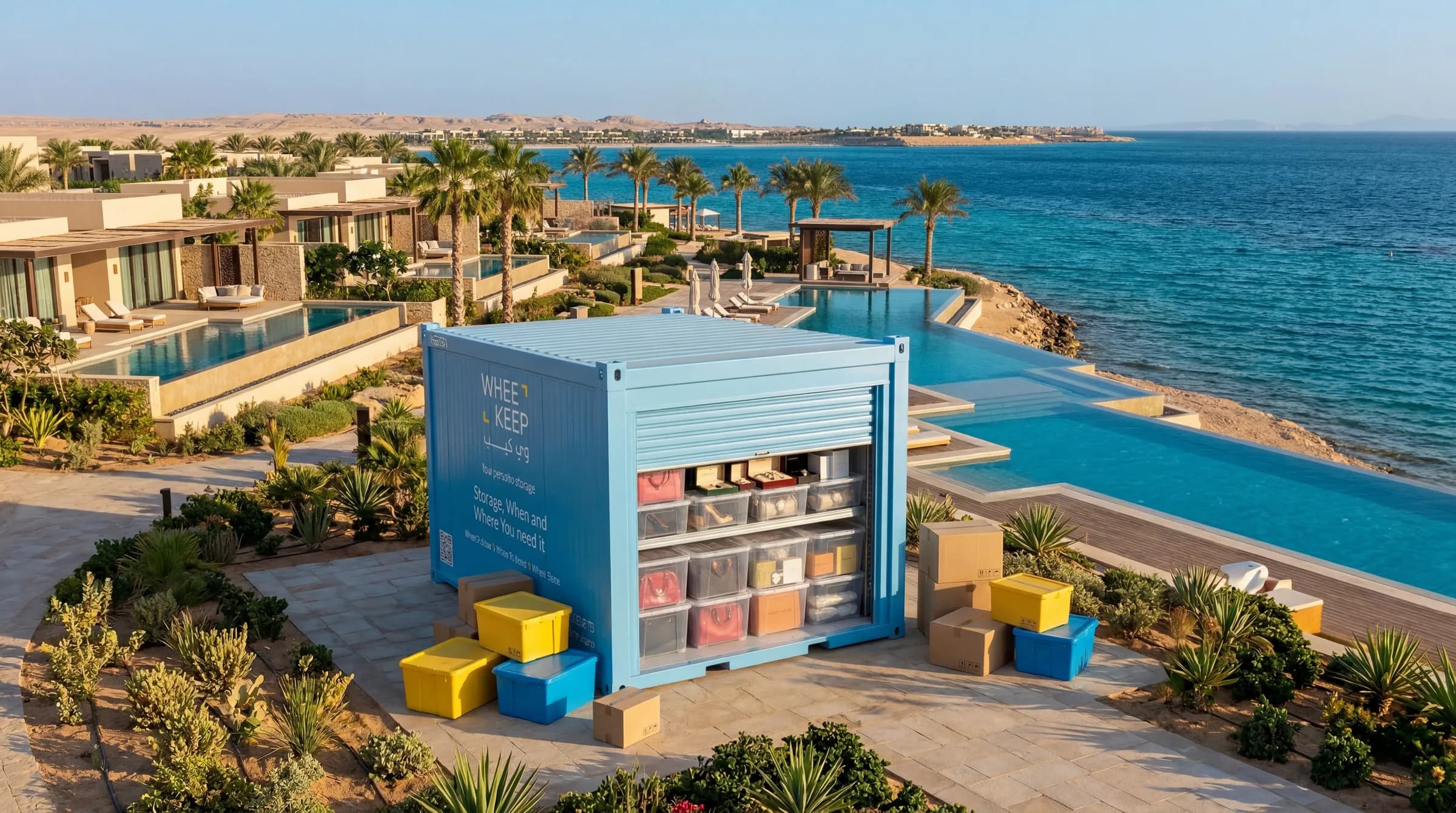
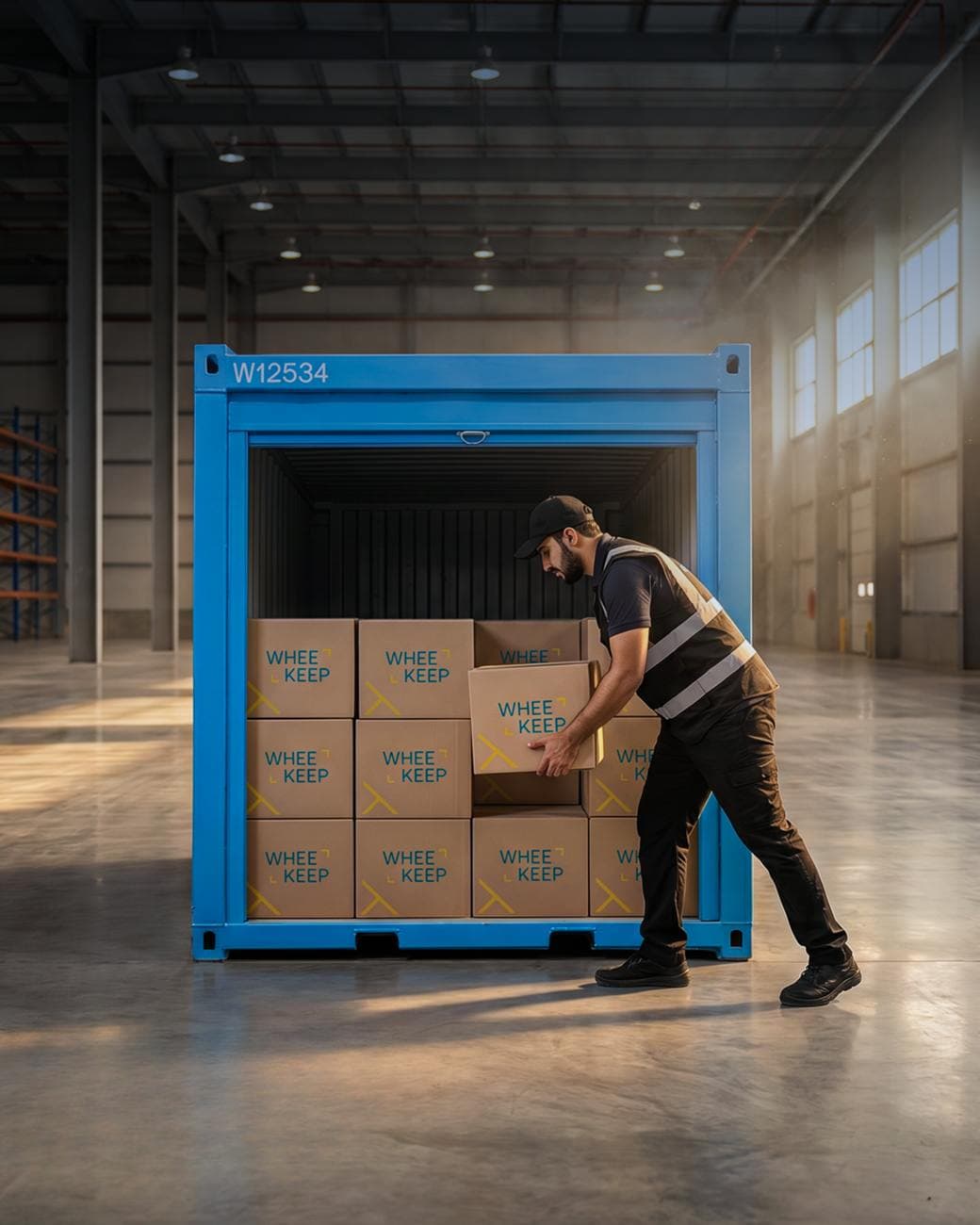
Downsizing in Saudi Arabia: A Family Storage Strategy
Discover how Saudi families can downsize stress-free using flexible self-storage units. Practical strategies for decluttering and reclaiming your living space.
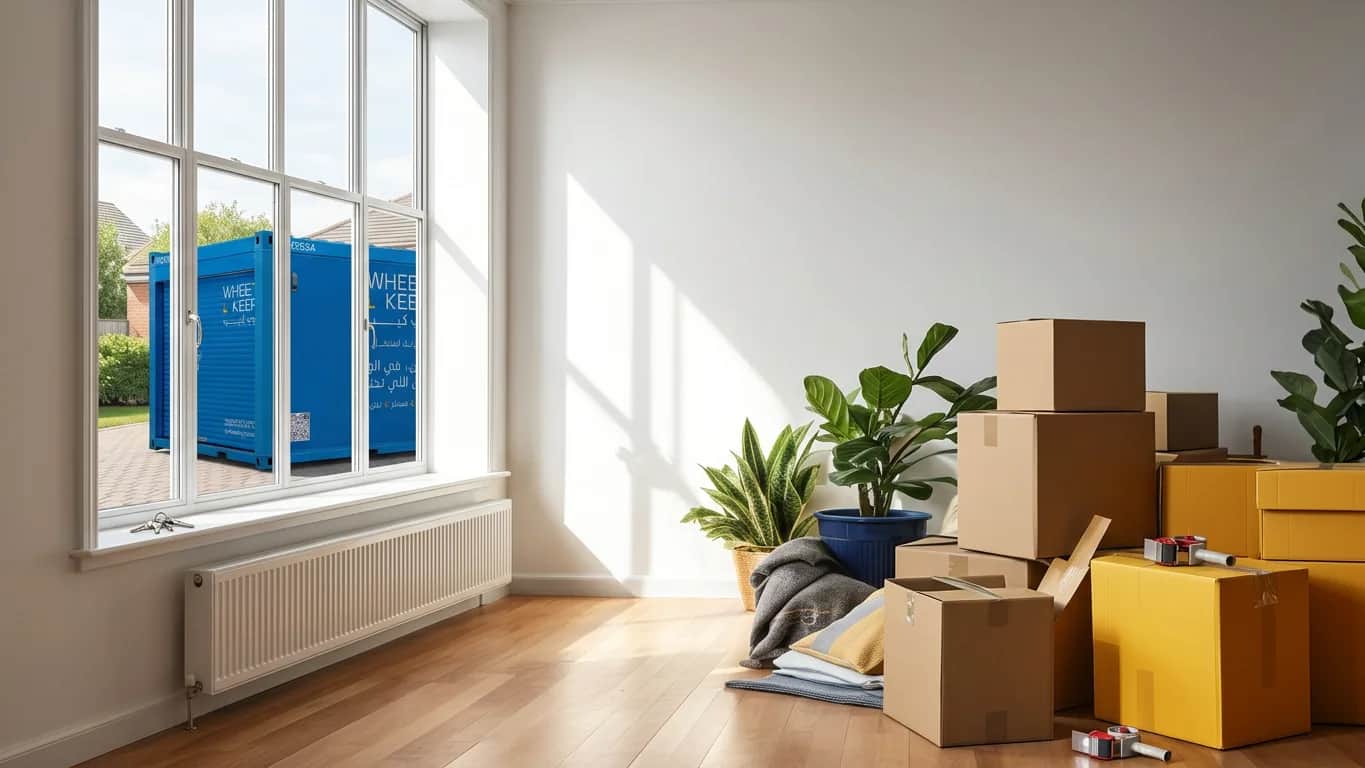
The living room in a Riyadh villa holds three generations of furniture. A grandmother's ornate wooden cabinet stands beside a toddler's plastic play kitchen. Wedding gifts still in their boxes compete for floor space with school textbooks, seasonal thobes, and a treadmill that has become, in practice, a very expensive clothes hanger. The family knows they need to simplify. They just don't know where to start, or more importantly, where everything will go.
This scenario plays out in homes across the Kingdom every single day. Saudi families are navigating a remarkable moment of transition: apartment living is increasingly common in cities like Jeddah and Riyadh, Vision 2030 is reshaping urban neighbourhoods, and a generation raised in spacious villas is now raising their own children in modern, compact apartments. The question isn't whether to downsize. It's how to do it without losing what matters, discarding what doesn't, and preserving your sanity throughout the process.
This guide is built for that exact challenge. It walks through a practical, step-by-step downsizing storage strategy for Saudi families, covering everything from emotional decision-making frameworks to the logistics of choosing the right household storage in Saudi Arabia. Whether you're moving from a four-bedroom villa in Jeddah's Al Rawdah district to a modern apartment near King Abdullah Economic City, or simply reclaiming two rooms in your current home, the principles here will help you move forward without looking back in regret.
Why Downsizing Feels Different for Saudi Families
Downsizing in a Saudi household context carries emotional and cultural weight that generic decluttering guides rarely acknowledge. Understanding these unique pressures is the first step toward building a strategy that actually works for your family.
Saudi homes are often the physical record of family history. Furniture purchased for a wedding, heirlooms passed from parents, gifts from relatives living in other cities or countries, items purchased during Hajj or Umrah trips, and seasonal goods tied to specific religious occasions all accumulate with deep meaning. Discarding any of it can feel like disrespect toward the giver or toward family tradition. This isn't sentimentality for its own sake; it reflects genuine cultural values around hospitality, generosity, and maintaining family bonds across generations.
At the same time, Saudi cities are experiencing real housing pressure. Riyadh's population has grown substantially over recent years, driving demand for apartment living in districts like Al Malqa, Hittin, and the rapidly developing areas near ROSHN's Sedra community. In Jeddah, families are increasingly choosing modern apartments in Al Shati and Corniche-adjacent developments over older, larger villas that require significant maintenance. In both cities, the shift from villa to apartment typically means cutting usable floor space by thirty to fifty percent.
The climate also shapes storage habits in ways that don't apply elsewhere. The extreme summer heat across the Eastern Province, Riyadh, and inland regions means that seasonal items, including heavy winter abayas, extra blankets, guest bedding, and outdoor furniture, need proper storage environments. Humidity in coastal Jeddah and Dammam creates real risks for fabric, wood, and electronics if items are stored improperly. Any downsizing strategy must account for these climate realities.
Finally, Saudi families tend to host at scale. Guest rooms, extra seating, additional dining sets, and large serving pieces are kept not out of excess but out of genuine hospitality culture. When a family moves to a smaller space, these items feel impossible to remove because they represent the family's ability to receive guests properly. The solution isn't to discard them; it's to store them smartly so they remain accessible when needed.
The Four-Category Sorting System That Actually Works
Before a single item leaves your home, you need a decision framework that removes the emotional paralysis from each individual choice. The standard "keep or discard" binary is too blunt for Saudi household contexts. Instead, work with four categories that respect both practical and cultural realities.
Category One: Active Daily Essentials
These are the items your household uses at least once a week. Everyday dishes, school uniforms, work clothes, prayer rugs used regularly, children's current toys, and kitchen tools you reach for habitually. This category should be ruthlessly honest. If you haven't used something in the past thirty days, it doesn't belong here regardless of how much you paid for it.
For most families moving from a villa to a modern apartment, this category should contain no more than forty percent of current household volume. If you're honest in your assessment, you'll likely find it's closer to thirty percent.
Category Two: Seasonal and Occasional Use
This is the largest and most important category for Saudi families. It includes Eid and National Day (23 September) decorations, Ramadan lighting and tableware, guest bedding and extra pillows, winter clothing (particularly relevant for families in Taif, Abha, or Tabuk where temperatures genuinely drop), outdoor furniture stored during the summer months, and children's items that are currently too small but will fit within the year.
This category is the primary candidate for self-storage in Riyadh or self-storage in Jeddah depending on your city. These items have genuine, recurring value, but they don't need to occupy your living space for most of the year. A dedicated storage unit becomes a seasonal wardrobe and occasion depot that you visit when needed, not a space you trip over daily.
Category Three: Long-Term Sentimental or Family Items
Heirlooms, wedding gifts, inherited furniture with family history, and items being held for children who will eventually establish their own households. These items should not be discarded. They should be stored properly, documented (photograph each item and note its significance), and revisited every two to three years to reassess whether anyone in the family is ready to take them on.
This is where a larger storage unit earns its value. Knowing that grandmother's cabinet is secure, climate-accessible, and retrievable preserves family peace in a way that no amount of home organisation can replace.
Category Four: Genuine Exits
Items that no one in the household will realistically use again, that have no sentimental value, and that are in usable condition. These should be donated to local charitable organisations, offered to extended family members who might benefit, or responsibly disposed of. Saudi Arabia has a growing network of charitable donation points and community exchange platforms. The important discipline here is not letting guilt push items from Category Four back into Category Two. If no one has thought about an item in two years and it carries no family significance, it has already served its purpose.
Room-by-Room Downsizing Guide for Saudi Homes
Abstract frameworks only go so far. Here is how to apply the four-category system to the specific rooms and spaces most commonly found in Saudi family homes.
The Majlis and Guest Reception Areas
The majlis is often the most heavily furnished room in a Saudi home, and the one families are most reluctant to downsize. In a smaller apartment, you likely cannot accommodate a full formal majlis set. The practical solution is to keep the core seating, store the overflow pieces (extra chairs, side tables, decorative items), and rotate them out for Eid gatherings or large family events.
Many families discover that a medium WheeKeep storage unit, at 3.6 × 1.5 × 2.35 metres for 899 SAR per month, comfortably holds an entire overflow majlis set alongside seasonal items, making it accessible for retrieval before major occasions without permanently crowding the new home.
Children's Rooms
Children's rooms in Saudi households accumulate at extraordinary speed. Between Eid gifts, school supplies from multiple years, seasonal clothing in multiple sizes (held for younger siblings), and toys spanning different age stages, a single child's room can easily contain items spanning five years of growth.
The approach here is straightforward: sort by age stage. Keep what fits now and what will fit within six months. Store what will be needed in twelve to twenty-four months, and prepare exits for anything beyond that or anything that will not be reused by a sibling. The stored items, particularly clothing held for younger siblings, represent real financial value and belong in proper storage rather than compressed into bags under a bed.
Kitchen and Dining Storage
Saudi kitchens support large-scale hospitality cooking. Industrial-sized pots, multiple serving platters, Ramadan-specific cookware, and duplicate appliances are common. In a smaller apartment kitchen, daily cooking equipment should be prioritised. Large-occasion cooking equipment, whether it's the enormous rice pots used for gatherings or the full formal dining set used only for special guests, can be stored externally and retrieved when needed.
This shift in thinking is important: you're not giving up your ability to host. You're simply relocating the equipment to a space that doesn't consume your daily living area.
Wardrobes and Clothing Storage
Saudi wardrobes are genuinely complex, containing formal thobes and abayas for different occasions, modest everyday wear, seasonal layering for cooler months, and often traditional dress items from different regions. A practical wardrobe downsizing strategy keeps the current season's active wear accessible and moves everything else into storage. Vacuum-seal bags significantly reduce fabric volume for stored items and provide good protection from humidity, which is particularly relevant in Jeddah and Dammam.
The Store Room (Makhzan)
Most Saudi villas have a dedicated storage room that serves as a catch-all for everything that doesn't fit elsewhere. When moving to an apartment without this space, families face their starkest storage challenge. The makhzan contents should be sorted through the four-category framework with particular rigour. In practice, many makhzan items fall into Category Four and haven't been touched in years. The genuine Category Two and Three items from the makhzan are prime candidates for a dedicated external storage unit.
How to Choose the Right Storage Unit Size for a Saudi Family
One of the most common and costly mistakes families make is choosing a storage unit that is either too small (causing them to rent a second unit later) or too large (paying for space they don't use). Here is a practical sizing guide based on the WheeKeep unit range.
| Unit Size | Dimensions | Price (SAR/mo) | Best For | Typical Family Scenario |
|---|---|---|---|---|
| Small | 2.4 × 1.5 × 2.35 m | 599 SAR | Seasonal items, wardrobe overflow, small appliances | Single person or couple; couple moving from a one-bedroom apartment to a studio; storing Ramadan/Eid décor and seasonal clothing |
| Medium | 3.6 × 1.5 × 2.35 m | 899 SAR | Furniture pieces, full wardrobe, kitchen overflow, children's items | Family of 3–4 downsizing from villa to apartment; holding majlis overflow, seasonal textiles, and children's stored clothing sizes |
| Large | 3.6 × 2.4 × 2.5 m | 1,289 SAR | Full room contents, inherited furniture, large appliances, business overflow | Extended family downsizing; storing heirloom furniture; family managing a transition between properties; business owners needing inventory buffer |
The medium unit at 899 SAR per month is WheeKeep's most popular size, and it's easy to understand why. For a typical Saudi family of four transitioning from a three-bedroom villa to a modern apartment, the medium unit provides enough space to hold the overflow without overwhelming the budget. All units include a padlock, CCTV security monitoring, and on-demand return access, with no long-term contract required.
If you're unsure which size to book, err toward the medium. The cost difference between a small and medium unit is modest relative to the frustration of discovering mid-move that you've run out of space. You can always downsize your unit later once you've assessed what you're actually storing.
Mid-article booking prompt: If your family is currently navigating a move or home transition in Jeddah or Riyadh, WheeKeep's flexible month-to-month storage means you can start immediately and adjust as you go. No long-term contract. No upfront commitment beyond the first month. Visit WheeKeep to check unit availability at your nearest location and secure your space before the move.
The WheeKeep Advantage: Storage Solutions Designed for Saudi Families
Not all storage providers offer the same experience, and for families navigating a downsizing transition, the details matter significantly. WheeKeep has built its storage solutions for families in Saudi Arabia around the specific realities of Saudi household life, and that focus shows in both the product and the service.
Strategic Locations Across the Kingdom
WheeKeep currently operates four accessible locations across Riyadh and Jeddah:
- WheeKeep Jeddah Hub, conveniently positioned in Jeddah's west, serving families across the city's residential districts (coordinates: 21.61865076556873, 39.13091624240242)
- WheeKeep Asfan, serving the northern Jeddah region and communities in the Asfan corridor (coordinates: 21.808103739333482, 39.43077899716639)
- WheeKeep Riyadh, serving families across the capital's southern and central districts (coordinates: 24.55849608344948, 46.474216866772544)
- WheeKeep Boulevard Hub (Riyadh), positioned in the northern Riyadh growth corridor near Boulevard City (coordinates: 24.779993152312215, 46.60675958995404)
This multi-location structure means that whether you're downsizing from a villa in Jeddah's Al Zahra district or relocating from a large apartment in Riyadh's Malqa neighbourhood, a WheeKeep facility is within practical reach. For families, proximity matters: you want to be able to retrieve seasonal items or access stored goods without it becoming a half-day excursion.
Flexible Terms That Match the Downsizing Timeline
Downsizing rarely happens on a fixed schedule. The process of sorting, moving, settling into a new space, and realising what you actually need typically unfolds over several months. WheeKeep's month-to-month contracts with no long-term commitment requirement mean your storage arrangement can evolve alongside your actual needs.
Many families find they need more space in the first two to three months after a move, as they're still sorting through what they want to keep in the new home versus what should remain in storage. After that initial settling-in period, they often downsize to a smaller unit. WheeKeep's structure makes that transition straightforward without penalty or complex paperwork.
Security That Protects What Matters
When you're storing items with genuine sentimental or financial value, including heirloom furniture, jewellery boxes, quality clothing, and electronics, security is non-negotiable. Every WheeKeep unit comes with a padlock and CCTV monitoring. This isn't a premium add-on; it's standard across all unit sizes. For families storing items they consider irreplaceable, this baseline of security provides the peace of mind that makes the entire downsizing process emotionally easier to accept.
Operating Hours That Work Around Saudi Life
WheeKeep operates Sunday through Thursday from 09:00 to 21:00, and on Saturdays from 12:00 to 20:00, with Friday closed in observance of the Islamic weekend. This schedule is specifically designed to accommodate Saudi working and family life. The extended evening hours mean that working parents can access their storage after a full workday, and the Saturday availability covers the active weekend errand-running that characterises Saudi family life.
Practical Packing Strategies That Protect Your Belongings
Getting items into storage is only half the challenge. How you pack and organise your unit determines whether you can actually retrieve what you need when you need it, or whether every visit becomes an excavation project.
The Access-Frequency Rule
Organise your storage unit by how frequently you'll need access. Items you'll retrieve seasonally (Ramadan and Eid decorations, winter clothing, occasion tableware) should be positioned closest to the door or in clearly labelled boxes at the front of the unit. Items you're storing long-term with no near-term retrieval plan (heirloom furniture, archived documents, family items being held for adult children) can be positioned at the back.
This sounds obvious, but most families pack their storage unit in move order rather than access order. They load the truck sequentially and unload it sequentially, which means the last items loaded (often the most recently used and most frequently needed) end up buried behind everything else.
Labelling Systems That Actually Work
Standard box labelling ("kitchen", "bedroom") is insufficient for a storage unit you'll access periodically over months or years. Use a three-part labelling system: the room of origin, the contents category, and the retrieval trigger. For example: "Kitchen | Ramadan Serving Dishes | Retrieve before Ramadan" or "Children's Room | Summer Clothes Size 8 | Retrieve when Reem turns 7."
Photograph each box's contents before sealing it and keep a simple digital catalogue (a notes app or shared family photo album works perfectly). When you need to find something specific six months from now, you'll be grateful for the thirty seconds you spent photographing the box contents.
Climate Considerations for Saudi Storage
The climate across Saudi Arabia's major cities creates specific storage challenges that require attention when packing:
- Fabric and textiles: Use vacuum-seal bags for clothing, bedding, and cushions to reduce volume and protect against humidity, particularly relevant for items stored in Jeddah and Dammam where coastal humidity can affect fabric.
- Wood furniture: Protect wooden furniture with breathable covers rather than plastic wrap, which can trap moisture. Disassemble where possible to reduce stress on joints during storage.
- Electronics: Store electronics in their original boxes where possible, or in sturdy boxes with foam padding. Keep them away from the floor level to reduce exposure to any potential ground moisture.
- Books and documents: Seal in plastic boxes rather than cardboard where possible, and include silica gel packets to manage moisture.
- Metal items: Apply a light coating of appropriate protective oil to metal surfaces (tools, decorative metalwork) before storage to prevent oxidation in humid environments.
Furniture Disassembly and Space Maximisation
A storage unit's usable capacity is dramatically larger when furniture is disassembled and stacked efficiently. Bed frames, wardrobes, dining tables, and shelving units should all be broken down to their component parts where possible. Stack flat items (mattresses, table tops, headboards) vertically against the walls to free floor space for boxes. Use the interior space of wardrobes and drawers to store smaller items, since those cavities represent usable volume even in storage.
Families who take the time to disassemble furniture and pack methodically often find that a medium unit holds considerably more than they expected, which can mean the difference between needing one unit or two.
Building a Downsizing Timeline That Reduces Stress
Downsizing an entire household is not a weekend project. Attempting to compress it into a short timeframe is one of the primary reasons families end up keeping things they should have released, or discarding things they'll later regret. A structured timeline distributes the emotional and physical work over a manageable period.
| Phase | Timeframe | Key Actions | Storage Relevance |
|---|---|---|---|
| Planning | 6–8 weeks before move | Photograph current home; measure furniture; map new floor plan; identify storage unit size needed | ⚠️ Book storage unit now to secure preferred size and location |
| Sorting | 4–6 weeks before move | Apply four-category system room by room; photograph sentimental items; identify donation candidates | ✅ Begin moving non-essential items to storage unit progressively |
| Packing | 2–3 weeks before move | Pack storage-bound items with full labelling; photograph box contents; disassemble furniture | ✅ Multiple storage runs better than one chaotic final-day load |
| Moving Day | Move date | Move only Category One (active daily essentials) to new home | ✅ Storage unit is already loaded; move day is clean and manageable |
| Settling In | Weeks 1–8 in new home | Live in the space; identify genuine gaps; retrieve items from storage as needed | ⚠️ Do not retrieve items impulsively, wait to confirm you genuinely need them |
| Reassessment | Month 3 onward | Review storage unit contents; downsize to smaller unit if appropriate; reassign or donate items no longer needed | ✅ WheeKeep's flexible terms make unit resizing straightforward |
The most important discipline in this timeline is the progressive storage approach during the sorting and packing phases. Families who make multiple smaller trips to their storage unit in the weeks before moving day arrive at the actual move date with far less chaos than families who attempt to sort, pack, and move everything simultaneously.
Downsizing Storage Across Different Saudi Life Stages
The downsizing challenge looks different depending on where a family is in their life cycle. A young couple moving from a family home into their first apartment faces different pressures than a retired couple whose children have left for university in Riyadh or abroad. Here is how the strategy adapts across life stages.
Young Families: The Accumulation Phase
Families with young children in the accumulation phase of life, typically buying furniture, building a household, and expanding their physical possessions rapidly, often find themselves downsizing not because they're moving to a smaller space but because the current home has become unmanageable. For these families, a storage unit functions as an extended home, holding the current size's worth of children's clothing for the next size up, seasonal items, and the overflow from a growing household.
In cities like Riyadh and Jeddah where young families are increasingly choosing apartments near schools and amenities, self-storage in Riyadh and self-storage in Jeddah provide the buffer that makes apartment living genuinely workable for a family that hasn't yet reduced its physical footprint.
Established Families: The Transition Phase
Established families, typically those with teenagers or young adults still at home, often face the largest volume challenge. Years of accumulation have filled every available space. The trigger for downsizing might be a property transition, a renovation, or simply the recognition that the home has become overwhelming. For these families, the four-category system requires genuine decisiveness, and a large WheeKeep unit at 1,289 SAR per month provides the space needed to stage the transition properly.
Empty Nesters: The Simplification Phase
Saudi parents whose children have moved out, whether to university, marriage, or careers in other cities, often find themselves in a large family home with rooms that no longer serve their original purpose. The emotional challenge here is distinct: these rooms and their contents represent the years of active family life. Moving to a smaller property makes practical and financial sense, but the items that filled those rooms carry decades of memory.
For these families, a storage unit functions as a holding space for items that belong to adult children who haven't yet established their own permanent homes. This is particularly relevant when children are studying abroad or working on temporary contracts and expect to return to Saudi Arabia within a few years. Rather than discarding items that will genuinely be needed later, storing them at WheeKeep preserves their value until the next stage of family life is ready for them.
Expatriate Families: The Departure Phase
Saudi Arabia hosts a significant expatriate population, and when expatriate families reach the end of their contracts or decide to return to their home countries, they face a complex storage decision. International shipping for an entire household is expensive and logistically complex. Storing items in Saudi Arabia while establishing a new home elsewhere is often the most practical approach, particularly for families who intend to return to the Kingdom within a year or two.
WheeKeep's flexible, month-to-month terms are particularly well-suited to this scenario. An expatriate family can store their Saudi household goods without committing to a fixed long-term contract, revisiting the arrangement when their plans become clearer.
Common Downsizing Mistakes Saudi Families Make (and How to Avoid Them)
After observing the full arc of household storage decisions, certain patterns of error emerge consistently. Understanding these mistakes in advance is the most efficient way to avoid them.
Mistake One: Trying to Downsize Without a Storage Buffer
The most common error is attempting to move from a large home directly into a small one without any storage buffer. Families convince themselves they'll make the decisions about what to keep in the new home once they're there, and everything that doesn't fit will be sorted out. In practice, a new home filled with boxes, overflow furniture in hallways, and items crammed into every available corner doesn't allow for clear-headed decision making. The stress of the environment drives poor decisions, both keeping things that should go and discarding things that shouldn't.
A storage unit booked before the move eliminates this pressure. You have a safe, secure place for the overflow, which allows you to settle into the new home calmly and make thoughtful decisions about what to retrieve.
Mistake Two: Underestimating Volume
Saudi households, particularly villas that have been occupied for a decade or more, contain far more physical volume than families typically estimate. The makhzan alone can fill a small storage unit. When adding the majlis overflow, children's items, kitchen appliances, and seasonal goods, families routinely underestimate their storage needs by thirty to fifty percent. The safest approach is to estimate your total volume, then add thirty percent to that estimate when selecting a unit size.
Mistake Three: Storing Items That Should Be Donated or Discarded
Storage should not be used as a way to defer difficult decisions about items that genuinely have no further use. Paying 599–1,289 SAR per month to store items you've already decided you don't want is an avoidable cost. The discipline of completing the four-category sort before moving to storage, rather than as an afterthought after loading the unit, saves both money and mental energy.
Mistake Four: Packing Without Documentation
Families who load a storage unit in a hurry and without systematic labelling and documentation invariably find that retrieval becomes a frustrating, time-consuming process. When Ramadan arrives and you need the serving dishes, you should be able to go directly to the correct box, not unpack half the unit to find them. Fifteen minutes of documentation per box saves hours of frustration over the course of a storage arrangement.
Mistake Five: Forgetting the Storage Unit Exists
This sounds absurd, but it happens. Families store items, settle into their new home, and then effectively forget about the stored items for an extended period. Months pass, and the storage unit becomes a financial burden for items they've already mentally replaced. Set a calendar reminder every three months to review your storage unit's purpose and contents. WheeKeep's on-demand access makes it easy to visit and reassess.
Downsizing Storage Saudi Arabia: Matching Your Strategy to Your City
Downsizing storage in Saudi Arabia is not a one-size-fits-all proposition. The specific city you're in shapes both the housing market pressures driving the decision and the practical logistics of managing a storage unit.
Riyadh: Rapid Development and Space Pressure
Riyadh's housing market is transforming at pace. The Royal Commission for Riyadh City (RCRC) has been overseeing significant urban development projects, and the city's population growth has made quality apartment living increasingly attractive for families who previously lived exclusively in villas. Districts like Al Malqa, Hittin, Al Narjis, and the areas around Boulevard Riyadh City are seeing high demand for modern apartment units.
For Riyadh families, WheeKeep operates two locations: the main Riyadh facility and the Boulevard Hub in the northern corridor. The Boulevard Hub's proximity to the new northern residential growth zones makes it particularly convenient for families relocating to these districts. Self-storage in Riyadh through WheeKeep provides the practical bridge between a family's current large-format living and the more streamlined apartment lifestyle they're transitioning toward.
Jeddah: Coastal Living and Humidity Challenges
Jeddah presents a slightly different profile. The city's coastal location brings genuine humidity challenges for stored items, making proper packing protocols more important than they are in the drier inland cities. Jeddah's residential market spans a wide range from older villa districts in Al Hamra and Al Zahra to modern apartment developments along the northern Corniche and the new King Abdullah Economic City corridor to the north.
WheeKeep's Jeddah Hub and Asfan locations serve different parts of the city's geographic spread, meaning that families in Jeddah's northern expansion areas and those in the established central districts both have accessible options. For families in Jeddah, the humidity-aware packing strategies outlined earlier in this guide are particularly important for textiles, wood, and electronics.
Frequently Asked Questions About Downsizing Storage in Saudi Arabia
How much does it cost to store household items in Saudi Arabia with WheeKeep?
WheeKeep offers three unit sizes at transparent monthly prices with no long-term contracts. A small unit (2.4 × 1.5 × 2.35 m) costs 599 SAR per month, a medium unit (3.6 × 1.5 × 2.35 m) costs 899 SAR per month (the most popular choice for families), and a large unit (3.6 × 2.4 × 2.5 m) costs 1,289 SAR per month. All units include a padlock, CCTV monitoring, and on-demand access.
What size storage unit does a Saudi family typically need when downsizing from a villa to an apartment?
Most families transitioning from a three-bedroom villa to a modern apartment find the medium unit (899 SAR/month) covers their needs comfortably. This unit accommodates majlis overflow seating, seasonal clothing and textiles, kitchen occasion items, and children's stored clothing sizes. Families with significant heirloom furniture or larger households may need the large unit.
Can I store furniture in a WheeKeep unit?
Yes. WheeKeep units are designed to accommodate furniture, including sofas, beds, wardrobes, and dining sets. Disassembling furniture before storage maximises space efficiency and protects items during storage. The large unit at 3.6 × 2.4 × 2.5 m can accommodate multiple rooms' worth of furniture.
How do I protect stored items from Jeddah's humidity?
For Jeddah storage, use vacuum-seal bags for textiles and clothing, breathable furniture covers (not plastic wrapping) for wooden items, foam-padded boxes for electronics, sealed plastic bins rather than cardboard for documents and books, and silica gel packets inside boxes containing fabric or paper items. These precautions significantly reduce humidity-related damage risk.
What are WheeKeep's opening hours?
WheeKeep facilities are open Sunday through Thursday from 09:00 to 21:00, and on Saturday from 12:00 to 20:00. Facilities are closed on Friday. The extended evening hours on weekdays allow working families to access their storage after office hours.
Does WheeKeep offer moving services alongside storage?
Yes. WheeKeep provides both self-storage and moving services, making it a practical one-stop solution for families managing a full household transition. This combination simplifies the logistics of getting items from your current home to your storage unit and eventually to your new home.
How far in advance should I book a storage unit for a planned house move?
Book your unit at least four to six weeks before your planned move date. This gives you time to begin moving non-essential items progressively, which reduces the stress and chaos of moving day itself. Booking early also ensures you secure your preferred unit size at your nearest WheeKeep location.
Is it better to store items before or after a move to a new home?
Before. Moving items to storage before moving day means your moving day involves only the items going directly into your new home. This makes the move faster, less stressful, and gives you a cleaner start in the new space. It also allows you to make thoughtful decisions about what to retrieve from storage once you've experienced the new home's actual layout and capacity.
What should I not put in a self-storage unit?
Items that should not go into storage include perishable food, live plants, hazardous chemicals, flammable materials, and illegal items. For standard household downsizing, the vast majority of items, including furniture, clothing, electronics, books, kitchenware, and seasonal décor, are entirely appropriate for storage.
Can expatriate families in Saudi Arabia use WheeKeep for long-term storage between contracts?
Yes. WheeKeep's month-to-month contract structure is particularly well-suited to expatriate families managing transitions between Saudi contracts or returning to their home countries temporarily. There is no requirement for a minimum long-term commitment, which provides the flexibility that contract-based expatriate life requires.
How do I make sure I can find items in my storage unit when I need them?
Use a three-part labelling system on every box: room of origin, contents category, and retrieval trigger. Photograph box contents before sealing. Organise the unit with high-frequency-access items nearest the door. Keep a simple digital catalogue (a shared photo album or notes app works well) updated as you add or remove items.
Can I change to a different unit size after I've started renting?
WheeKeep's flexible terms make it straightforward to adjust your unit size as your needs change. Many families start with a larger unit during the active transition phase and downsize to a smaller unit once they've settled into their new home and completed their final sorting decisions.
Key Takeaways for Saudi Families Downsizing Their Homes
- Start with a clear sorting framework. The four-category system (active daily essentials, seasonal and occasional use, long-term sentimental items, genuine exits) removes emotional paralysis from individual decisions and creates a structured path through the process.
- Saudi households have unique storage pressures. Majlis furniture, occasion tableware, seasonal religious décor, multi-generational items, and climate considerations all shape a downsizing strategy that generic guides don't account for.
- A storage unit is not a last resort; it's a strategic tool. Using household storage in Saudi Arabia as a deliberate buffer during a move or simplification project results in better decisions, less stress, and a more successful outcome.
- Book early and pack progressively. Moving items to your WheeKeep unit in the weeks before moving day, rather than on the day itself, transforms the moving experience from chaotic to manageable.
- Match your unit size to reality, not optimism. Saudi households typically contain more volume than families estimate. When in doubt, choose the medium unit (899 SAR/month) over the small, and adjust after your first assessment visit.
- Document everything. Photograph box contents, use descriptive labelling, and maintain a simple digital catalogue. This investment pays dividends every time you need to retrieve a specific item.
- Climate-aware packing matters in Saudi Arabia. Jeddah's humidity and the Kingdom's extreme summer temperatures create real storage risks for textiles, wood, and electronics. The right packing materials protect your belongings over months of storage.
- WheeKeep's flexible terms match the unpredictable nature of life transitions. No long-term contracts means your storage arrangement can evolve alongside your actual situation, whether you're a Saudi family downsizing a villa or an expatriate managing a contract transition.
That family in the Riyadh villa, surrounded by three generations of furniture and a lifetime of accumulated belonging, doesn't have to choose between their past and their future. They just need a clear system, a realistic timeline, and a trusted place to hold the items that matter while they figure out where everything belongs in the next chapter of their family's life. That's exactly what WheeKeep is built for.
Ready to start? Visit WheeKeep to explore available units at your nearest Riyadh or Jeddah location, check sizing and pricing, and book your storage space today. No long-term commitment required, no hidden fees, and access on your schedule, when and where you need it.